When we adopted Margot, her entire outdoor résumé was eleven city blocks, a fire hydrant, and a strong opinion about skateboards. Eight weeks later she climbed her first real trail — three miles, one creek crossing, one moment of pure deer-related chaos handled with what I’d call a B-plus. This is how we got there, because the gap between a city dog and a trail dog is real, and it’s shorter than you think if you build it on purpose.
Trail fitness is built, not bought. But the gear still helps.
Weeks one and two: the boring base
Nothing about this stage is Instagrammable. We simply stretched her normal walk from twenty minutes to forty, then added hills — parking garages, bridge stairs, the one steep street in our neighborhood. Fifteen extra minutes a day, five days a week. Dogs build aerobic base quickly; what you’re actually conditioning is joints, paw pads, and her belief that long walks are just how life is now.
Watch the paws. City sidewalks and soft apartment floors make soft feet. Gravel and roots are a shock to a pad that’s never met them. If her stride shortens or she starts licking feet after walks, back off a week and let the pads callus.
Week three: a trail that flatters you both
The first trail should be insultingly easy. Wide, flat-ish, under two miles, popular enough that other dogs normalize the whole concept. You are not training for elevation; you’re training for weird — root grids, log bridges, other hikers with trekking poles, the smell of a hundred unknown animals.
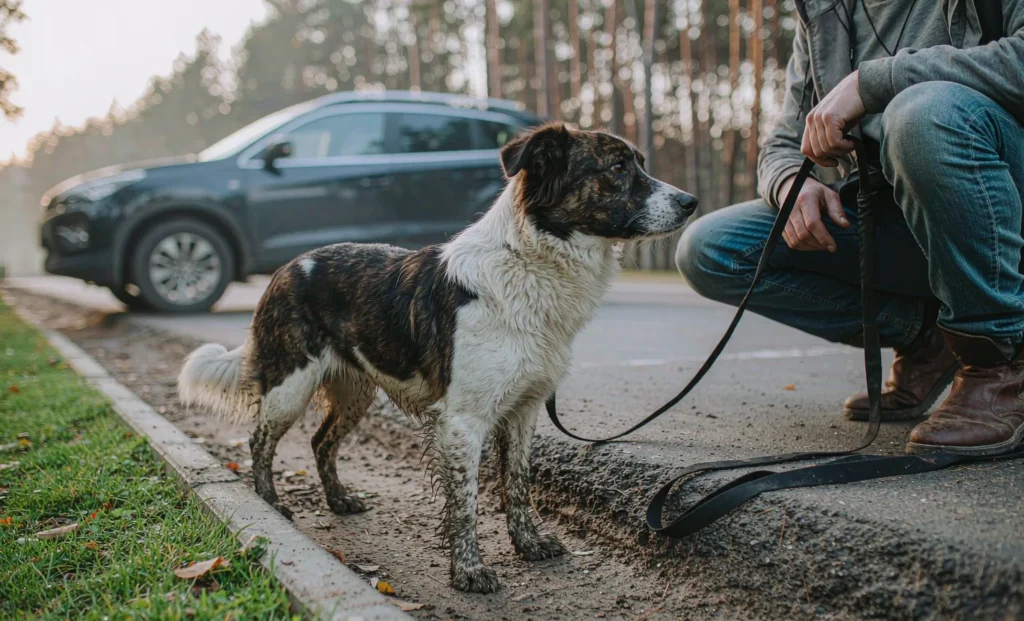
Her leash rules change at the trailhead. We run the flat stretches on the hands-free bungee leash, which keeps my balance on uneven ground and takes the sting out of every squirrel-related opinion. The second a trail narrows or we pass people, she’s on the short traffic leash at my left knee. Two leashes sounds like too much gear until you’ve done it once; then it sounds like the minimum.
Trail manners that actually matter
- The pass. Step off the downhill side, dog sits at your left, hiker passes, release. Practice this on sidewalks until it’s automatic — it’s the single behavior that makes you welcome on any trail.
- Wildlife. Deer are not dogs. The first time Margot saw one, every city skill evaporated for about four seconds. A well-fitted harness is what turns four seconds into a story instead of an incident — our no-pull harness with front clip has earned its $29.80 many times over.
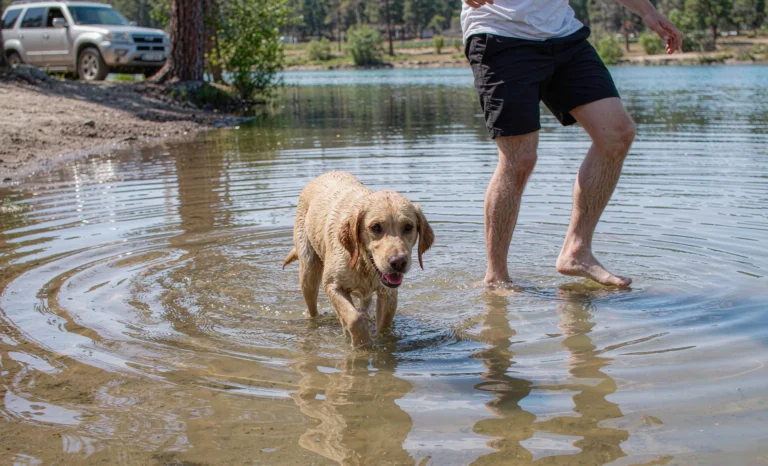
- Water crossings. Let the dog decide the pace. The first creek is a lecture, the second is a negotiation, the third is a party. Bring a towel regardless.
What goes in the daypack
More water than seems reasonable — a working dog on a trail drinks roughly a liter for every two hours of moving. Then: the collapsible bowl, high-value treats, a treat dispenser toy for the lunch stop (it turns a rest break into a job), and a towel. That’s the whole list. Trails forgive simplicity; they punish complexity.
The car reset, or: why the hike ends in the trunk
Here’s the part nobody mentions: the trail doesn’t end at the trailhead, it ends in your cargo area. A muddy, creek-soaked dog plus a car interior is where outdoor plans go to die — and where the whole sport quietly becomes unsustainable.
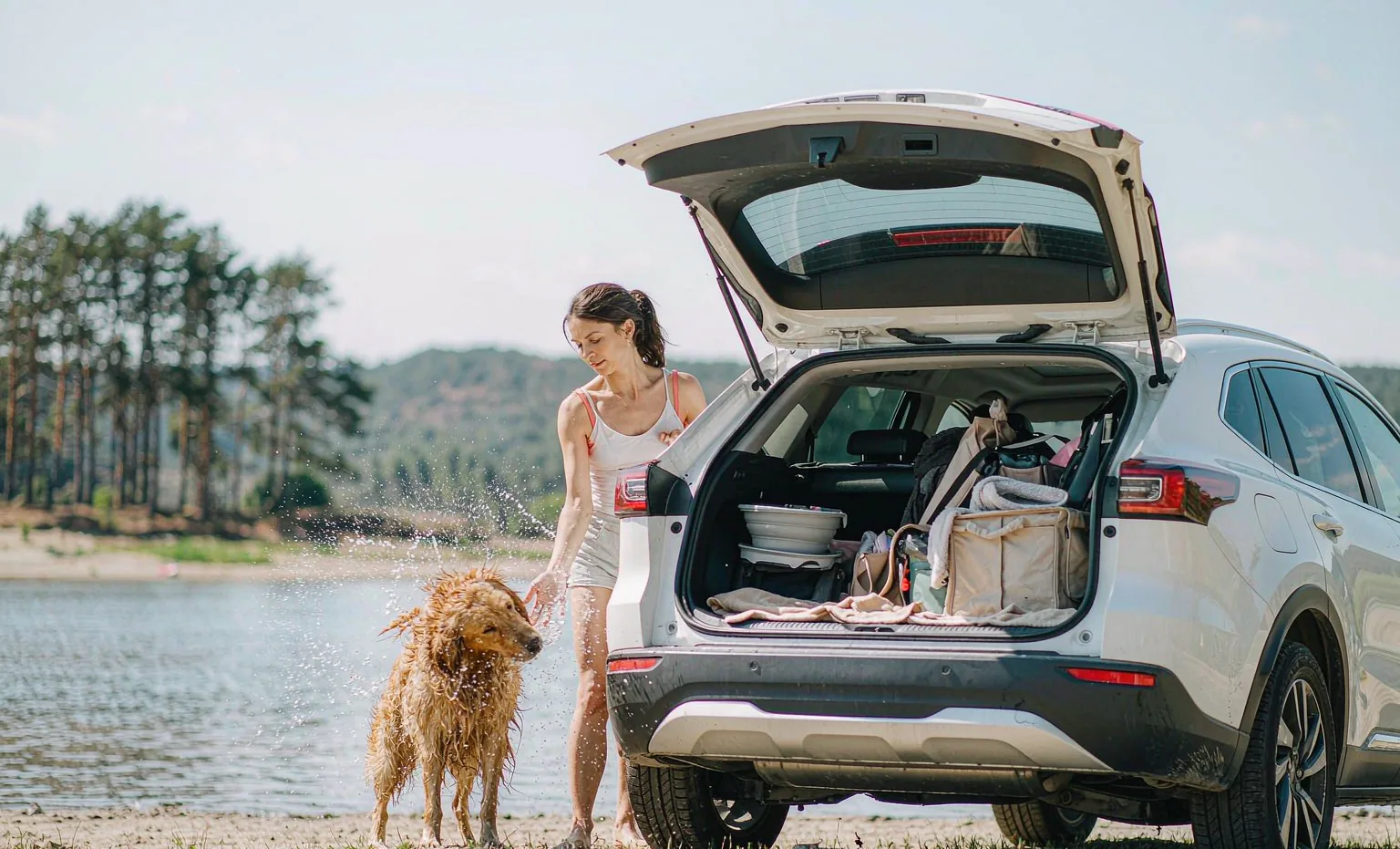
Our reset is now a two-minute routine. The TPE cargo liner takes the mud and hose-clean reputation for granted. The quilted bench cover goes on for the drive home so she can ride up front with us instead of alone in the back. Towel first, windows cracked, water bowl on the liner, and she’s asleep before we hit pavement. The reset being easy is the reason we go every weekend instead of twice a summer.
Aftercare: check paws for cuts and packed debris, do a quick tick check at the car and again at home, and give her an easy evening. A tired trail dog needs a boring night — and a chew set on her bed beats a second hike every time.
Questions about a first trail dog
How far should a first real hike be?
Under two miles with less than 300 feet of climbing, for a reasonably fit adult dog coming off city walks. If she’s pulling at the end, it was too short — that’s the good problem.
Do dogs need boots for trails?
Almost never for easy terrain — pads toughen faster than most people expect. Boots earn their place on scree, hot rock, snow, or after a pad injury. Condition the paws first; buy boots for the exception.
What if my dog is reactive to other dogs on the trail?
Choose wide, low-traffic trails, hike early, and master the pass at home first. A front-clip harness gives you the steering you need. Reactive dogs get to love trails too — they just need room and predictability.
When can a dog swim on a hike?
When the entry is gradual, the current is slow, and you can wade in with them. Carry the towel you were already bringing.
Build your own progression in the trail scene — or let the season box do the packing for you.
Read next: a dog’s first swim · photographing the drive
More from Outdoor Pets
Part of Explore Together · Drive Together · Gear Lab · Season Boxes