The difference between a good weekend away with a dog and a bad one is usually decided before you leave. Not by the weather, and not by the dog — by whether the place you are going actually wants you there. I have driven three hours with a full car to arrive at a trailhead with a no-dogs sign, and I have since learned to check four things before I commit to anything.
A weekend outdoor gathering can be one of the best ways to combine time with friends, fresh air, and a pet-friendly adventure. It can also produce a demanding vehicle day: multiple passengers, changing weather, muddy paws, food, unfamiliar people, and a tired animal on the return trip. Preparing the vehicle is less about carrying every possible accessory and more about creating a clear plan for each stage of the outing.
The ideal preparation begins before the vehicle is loaded. You need to understand the destination, decide what your pet will do there, identify the conditions that may affect the vehicle, and choose a packing system that can be reset afterward. You also need to account for the human occupants and the driver's attention. A comfortable pet experience depends on a calm, workable whole-vehicle routine.
This guide offers a flexible framework for a gathering at a park, private property, campground-style setting, patio, or other outdoor venue. It does not make universal safety promises or describe legal requirements. Check venue rules, product instructions, local conditions, and advice from qualified professionals as appropriate.
Start with the gathering plan
Confirm the destination details
Find out where you will park, how far the vehicle will be from the gathering, what surfaces are present, whether water is available, and how long people expect to stay. Ask whether other animals will attend and whether the host has areas where pets are welcome or restricted.
A destination with grass and shade creates a different preparation list than a gravel lot, a beach, or a busy event area. Knowing the layout helps you decide what should be carried from the vehicle and what can remain packed until needed.
Define the pet's role
Not every pet enjoys every gathering. Decide whether your pet will participate for the full visit, join for part of it, or remain at home. Consider the animal's behavior, energy, health, social comfort, and ability to settle in a new environment. If you are unsure, ask a qualified veterinary or behavior professional for individualized guidance.
A pet-friendly gathering is not automatically pet-appropriate. Making an honest plan before departure can prevent a difficult decision after arrival.
Make a weather-aware plan
Outdoor conditions can change the experience quickly. Check the forecast, but also prepare for the possibility that the ground becomes wet, shade is limited, or the temperature feels different than expected. Do not leave a pet unattended in a vehicle. If weather conditions make the outing uncomfortable or unsuitable, be ready to shorten the visit or change the plan.
Prepare the vehicle the day before
Remove unrelated clutter
Begin with a clear vehicle rather than loading into an already crowded space. Remove loose objects, old receipts, empty containers, and supplies from previous trips. A clear starting point makes it easier to see what the gathering actually requires.
Check that luggage, passenger items, and pet gear have separate places. The driver should not need to move loose objects to see mirrors, access controls, or manage the route. If the vehicle is shared, tell other drivers about the temporary arrangement.
Choose the travel zone
Decide where the pet will travel and where the human passengers will sit. The arrangement should reflect the vehicle, the pet, and the travel product's instructions. Keep the driver's area and controls clear, and avoid setups that allow loose movement to interfere with driving.
If you use a carrier, cover, organizer, or other accessory, inspect it before the trip and use it as directed. Do not assume an item fits simply because it fit another vehicle or another configuration.
Protect high-contact surfaces thoughtfully
Outdoor gatherings can mean dirt, sand, grass, moisture, food crumbs, and pet hair. A suitable washable surface or cover may help with cleanup when it fits the vehicle and is cared for according to its instructions. The point is not to cover every surface. It is to identify where contact is most likely and make that area easier to reset.
Leave access points, seat belts, controls, and visibility unobstructed. If an accessory changes the way people or pets enter, exit, sit, or load, review the instructions and test the arrangement before the event.
Build a gathering-specific packing list
Pet basics
Pack the items your pet needs for the planned duration and activity. These may include a leash or harness, water container, food in a closed container, waste bags, and any prescribed medication handled according to professional instructions. Include identification information and an arrival plan.
Keep food and medication separate from dirty gear and cleaning supplies. Label anything that could be confused with another pet's supplies. If multiple animals attend, ask the host how shared bowls, toys, and treats will be handled.
Comfort and settling items
A familiar mat, blanket, or toy may help your pet settle, provided it is appropriate for the setting and does not create a loose hazard during travel. Bring only the comfort items that are likely to be used. Too much gear makes the vehicle and gathering harder to manage.
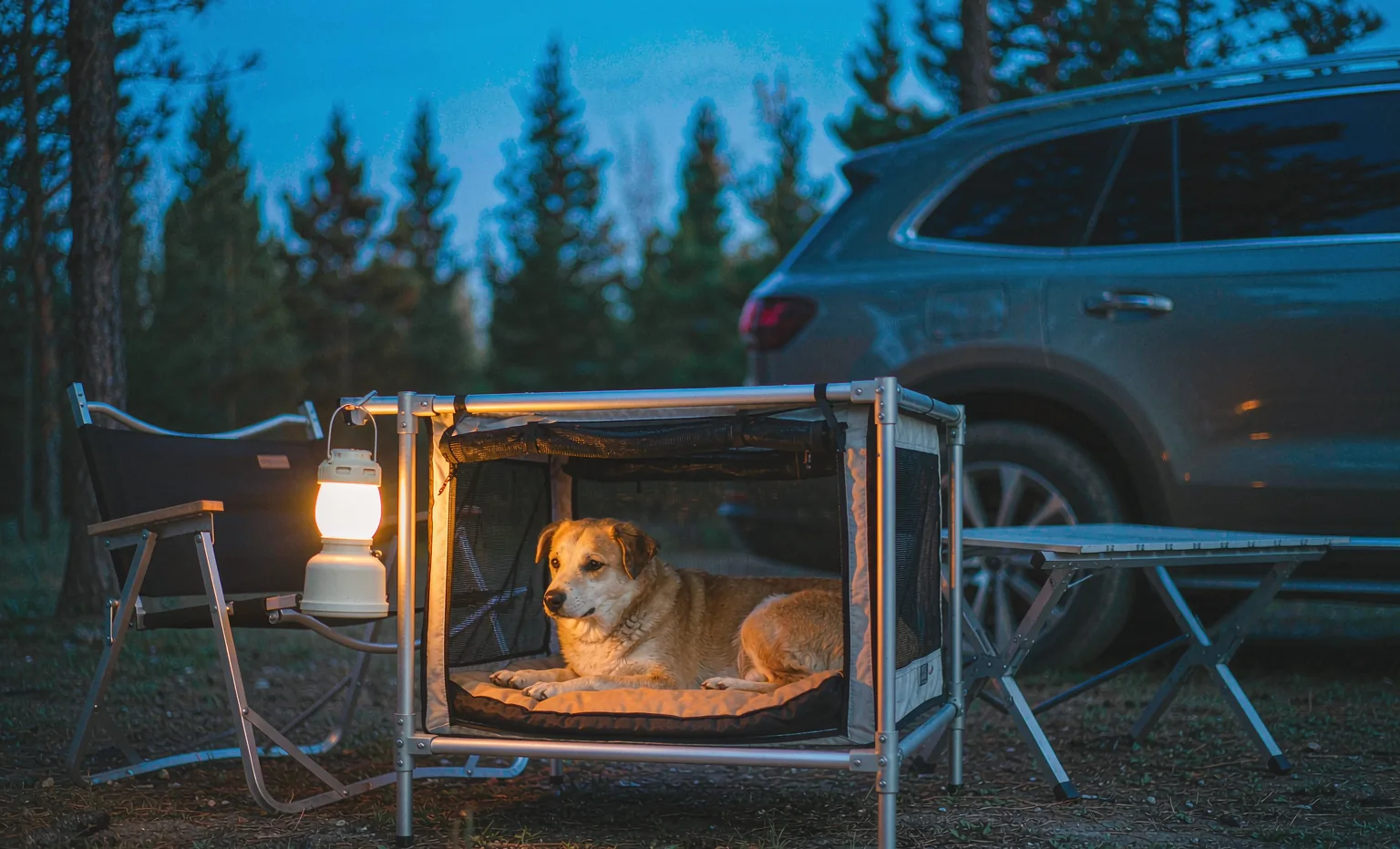
Think about where the pet can rest away from the busiest activity. A quiet location can be more valuable than another accessory. The vehicle can provide a transition point, but it should not be treated as a place to leave an unattended animal.
Clean-up supplies
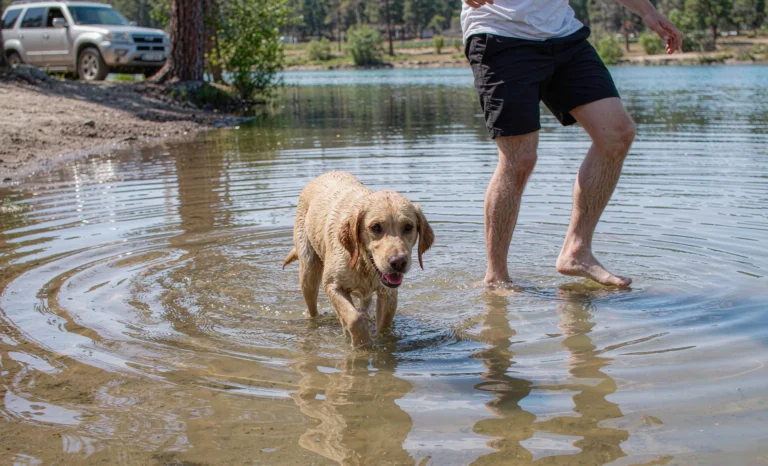
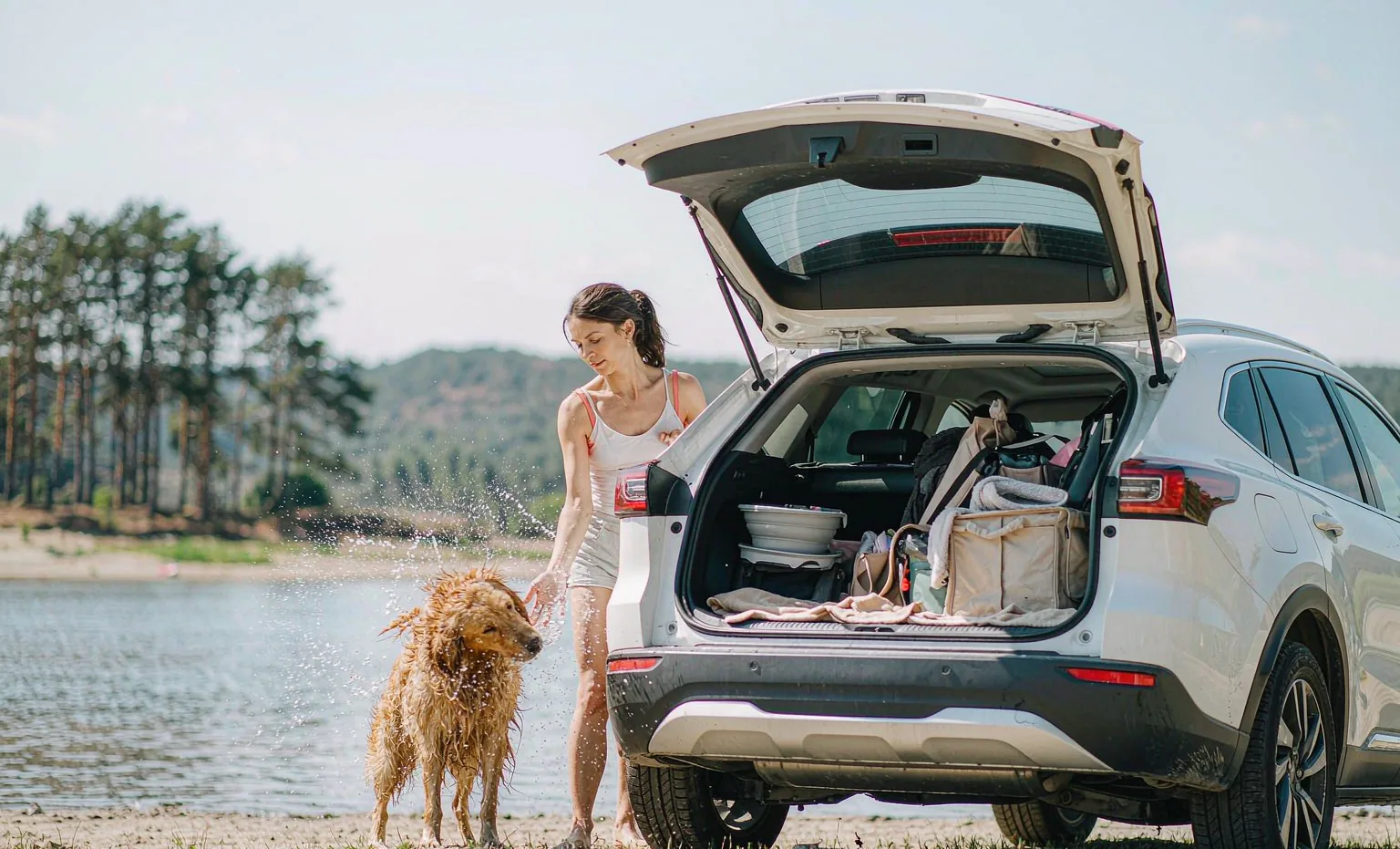
Prepare for the return trip, not just the arrival. Pack a towel, cloth, or other suitable clean-up item; a washable or closed bag for used gear; and a plan for waste disposal. If your pet may enter water or mud, assume that the vehicle will need a more deliberate reset.
Use cleaning products only as directed and make sure they are appropriate for the surfaces involved. Keep them separated from food and from anything the pet may lick or ingest.
Human supplies
The vehicle is also carrying people. Make room for personal bags, outdoor clothing, seating items, food, and any event equipment without mixing these with pet supplies. Give every category a place so that the driver's access and the pet's travel area remain clear.
A human-centered plan makes the pet routine easier. When people are comfortable and not searching for belongings, they can give more attention to the animal and the road.
Organize by stage, not just by item
Stage one: departure
Place the items needed for loading where they are visible and easy to reach. Confirm the route, destination instructions, and expected duration. Give the pet time to settle before moving the vehicle.
Stage two: arrival
Pack the items that will move from the car to the gathering together. A portable caddy or clearly labeled bag can prevent repeated trips to the vehicle. Decide who carries the pet supplies and who handles the animal at the first moment outside.
Stage three: active gathering
Keep a small, accessible set of essentials at the pet's area rather than returning to the vehicle for every need. Monitor how the pet responds to noise, people, animals, food, surfaces, and temperature. Adjust the plan if the pet appears uncomfortable or overstimulated.
Stage four: departure from the gathering
Before loading, collect all pet and human items, dispose of waste appropriately, and use the clean-up supplies you packed. Check the pet's condition and settle the vehicle zone before beginning the drive.
Stage five: home reset
Remove used towels, waste, food containers, and wet items when you arrive home. Replenish supplies immediately or add them to a short restock list. Clean the high-contact area using the appropriate care instructions.
Manage muddy, wet, and sandy conditions
Create a dirty-gear boundary
A dirty-gear boundary can be as simple as a separate bag or container. The boundary keeps wet or muddy items from contacting clean blankets, food, human clothing, and other supplies. Make sure the container itself is suitable for what you put inside it.
Give the pet a transition moment
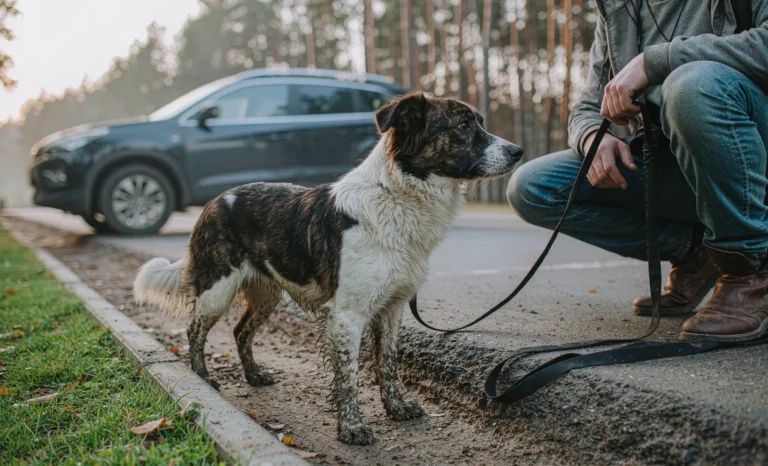
If the pet is wet or dirty, pause before loading. Use the planned towel or cloth and remove the most obvious debris without turning the process into a stressful struggle. If the pet is uncomfortable with handling, adapt the routine and seek professional advice for recurring issues.
Protect the return trip
The trip home is often when everyone is tired. Keep the return arrangement simple and familiar. Do not place loose wet items where they may slide, spill, or distract the driver. Once home, remove damp materials promptly so the vehicle can dry and air out according to the care requirements of the surfaces and products involved.
Plan around food and social activity
Outdoor gatherings often involve open food, dropped snacks, grills, coolers, and guests who want to offer treats. Ask the host about the plan for pets around food and communicate your own preferences clearly. A pet's dietary needs may be individualized, and a general event checklist cannot replace professional advice.
Keep pet food and treats in closed containers and separate from human food. Avoid leaving packaging or small objects where an animal can reach them. If children are present, explain the household's rules for approaching, feeding, and playing with the pet.
Social energy also matters. Your pet may need breaks from the crowd. Watch for changes in behavior and offer a quieter option if appropriate. A shorter, calmer visit can be more successful than insisting on a full-day schedule.
Account for multiple pets
Multiple pets create more variables: separate supplies, different temperaments, different feeding needs, and more complex loading. Label containers and assign responsibilities before departure. If pets should not share food, toys, or resting spaces, communicate that to all adults involved.
Keep the vehicle arrangement consistent and avoid adding loose items simply because the group is larger. If the vehicle cannot provide a workable arrangement for the number of people and animals traveling, reconsider the travel plan or use a different transportation option that is appropriate for the occupants.
Give the driver a low-distraction environment
The driver should not be expected to manage a pet, hand out supplies, answer event questions, or search for a towel while the vehicle is moving. Put essentials within reach of a passenger or wait until the vehicle is parked. Use navigation before departure when possible, and stop in a suitable location if a significant need arises.
A calm driver is part of the pet-friendly plan. Clear roles, stable storage, and a pre-drive check help everyone arrive with less tension.
A practical day-of checklist
Use the following as a starting point and adapt it to your gathering:
- Confirm the destination, parking, venue rules, and expected duration.
- Decide whether the pet will attend and how much of the event is appropriate.
- Check weather and identify a plan if conditions change.
- Remove unrelated clutter from the vehicle.
- Prepare the pet's travel arrangement according to instructions.
- Pack arrival control, water planning, food, waste bags, and prescribed items as appropriate.
- Add a comfort item and clean-up supplies if useful.
- Separate clean supplies, human belongings, and dirty-gear storage.
- Assign loading, arrival, and return responsibilities.
- Plan how the pet will settle and take breaks.
- Never leave the pet unattended in the vehicle.
- Reset the vehicle promptly after returning home.
Common preparation mistakes
Treating the gathering as a normal errand
A weekend event has more variables than a quick trip. Give yourself time to plan the destination, social environment, weather, and return journey.
Packing without a place for used items
Wet or muddy gear needs a destination. Without one, it will end up on seats, floors, or clean supplies.
Assuming every pet enjoys crowds
Some pets thrive in social settings; others need distance or quiet. Let the animal's behavior guide the plan and ask a qualified professional when concerns persist.
Leaving the vehicle as a fallback room
The vehicle can be a transition point, but it is not a substitute for appropriate supervision and care. Never leave a pet unattended in a vehicle.
Forgetting to reset before the next workday
A quick unpack and restock prevents Monday's commute from beginning with event debris. Put supplies back in their normal locations.
Coordinate with the host and other guests
A little communication before the gathering can prevent many vehicle and pet problems. Tell the host whether your pet is attending, ask about other animals, and clarify where the pet may rest, walk, or eat. If the gathering involves children, food, water features, or active games, discuss expectations with the adults responsible for those areas.
Do not assume that a host has supplies suitable for your pet. Bring the items that are important to your routine, and label them if several animals will be present. If the host has a no-pet area, follow it without trying to improvise a workaround.
Create a departure signal
At a long event, it can be hard to know when a pet has had enough. Agree with the other adults on signs that it is time for a break or departure. Changes in behavior, difficulty settling, or repeated attempts to move away from activity can be useful prompts to reassess, but a general article cannot diagnose a pet's condition.
A clear departure signal also helps the human group. If one person is responsible for gathering the vehicle gear and another is responsible for the pet, both tasks can happen without a rushed search at the end of the day.
Keep an event inventory
Take a photograph of the loaded vehicle or write a short inventory before leaving home. Include the number of bags, containers, comfort items, and human belongings. This is useful at a busy gathering where items may be moved between the vehicle and the activity area.
At departure, compare the vehicle and gathering area with the inventory. Retrieve waste, packaging, toys, towels, and personal items. The practice takes little time and reduces the chance of leaving behind something important or bringing home someone else's gear.
Review the setup the next morning
After a wet or dusty weekend, give the vehicle a next-day review rather than assuming a quick unload was enough. Check under the travel zone, inspect seams and storage pockets, and make sure no damp items remain. Follow care instructions for covers, mats, organizers, and cleaning materials.
Use what you learn to improve the next outing. If the event required supplies that were difficult to access, repackage them. If you carried items that were never used, move them out of the base kit. Preparation becomes easier when every gathering teaches you something practical.
FAQ
What should I do if the weather changes during the gathering?
Reassess the pet's comfort and the venue conditions. Move to an appropriate sheltered option, shorten the visit, or leave. Never leave a pet unattended in a vehicle, and seek professional guidance for health concerns.
How can I keep a vehicle clean after a muddy event?
Create a dirty-gear boundary, pack towels or suitable clean-up items, use a container for used materials, and remove damp items promptly after arriving home. Follow care instructions for all surfaces and accessories.
Should I bring my pet to every outdoor gathering?
No. Consider the pet's temperament, health, comfort, the crowd, the setting, and the length of the event. A pet's needs should determine participation.
How do I prepare if several pets attend?
Separate and label supplies, clarify feeding and play rules, assign adult responsibilities, and use a vehicle arrangement that remains workable for every occupant and the driver.
Can I use the vehicle as a quiet place for my pet during the event?
The vehicle should not be used to leave a pet unattended. Instead, arrange appropriate supervision and a suitable environment, or choose a shorter visit or a no-pet plan.
Make the weekend easier from driveway to destination
How do I check if a trail allows dogs?
Call the local land manager rather than trusting a third-party app. Apps are crowdsourced and frequently out of date; rangers know the current rule, the seasonal closures and the leash regulation in one conversation.
Is it fair to leave a dog at camp while you hike?
For most dogs, yes — with water, shade and a setup they have practised in before. Never leave them in a vehicle to wait. More than a few minutes parked, even in shade, is not a plan.
Read next: Explore More · Outdoor Pets · heat in a parked car. Start from Drive Together for the everyday rides, or the Gear Lab to compare before you buy.