Every lake day starts the same way: the dog follows you in up to her elbows, stops, and gives you a look that translates roughly as you know I can’t swim, right? Then, if you do it right, something flips — usually around the third visit — and you spend the rest of the summer trying to get her out of the water.
A dog’s first swim is a teaching day, not a swimming day. Here’s how to run it.
The goal on day one isn’t swimming. It’s a dog who chooses to go back in.
Read the shoreline before anything else
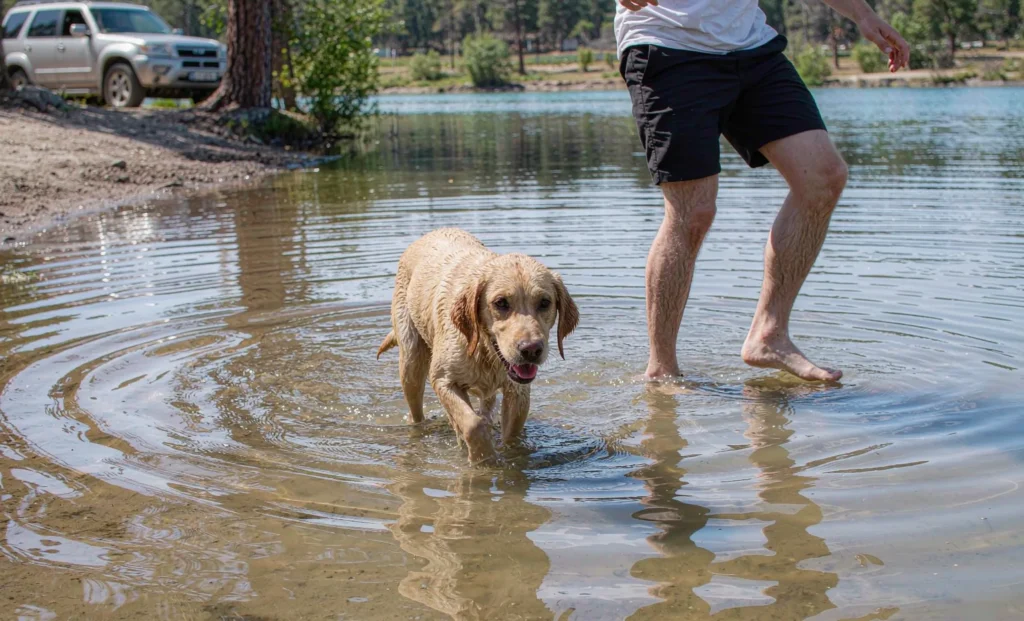
Gradual entry beats everything. A dog who can walk in up to her chest and still feel bottom is a dog who’ll try again; a dog who steps off a ledge on her first attempt may not. Check for: a sandy or gravel slope, no strong current, no underwater drop-offs, and an exit she can find on her own. Skip the dock-jumping videos for now — that’s a season-two activity.
The first ten minutes
Don’t carry her in. Walk in yourself, up to your knees, and let her follow — she’ll come further than you expect when nobody is holding her. Splash the surface, call her name, praise the elbows, praise the chest. The moment she lifts all four paws, even for a stroke and a half, that’s the whole day’s win. End on it.
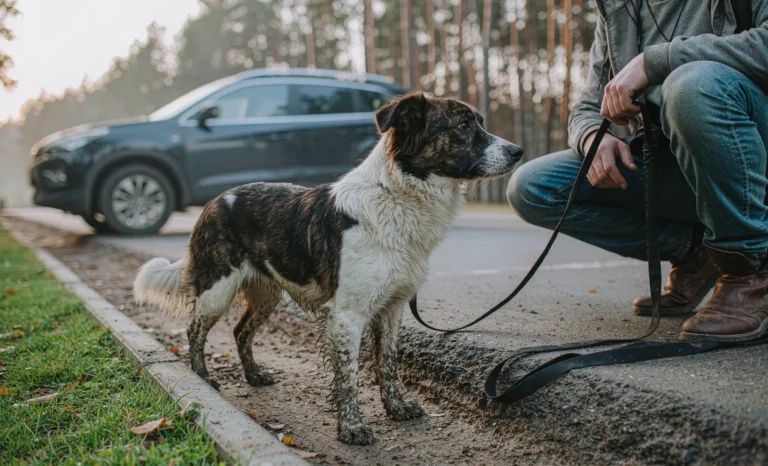
She’ll be wearing her harness, and it should be one you can grab: a front-clip harness with a top handle gives you a hold at the exact moment a dog decides the water was a mistake. Keep her on the hands-free bungee leash at the start if the shoreline is shared — beaches are exciting and recall is the last skill to arrive, not the first.
The part people forget: the drive home
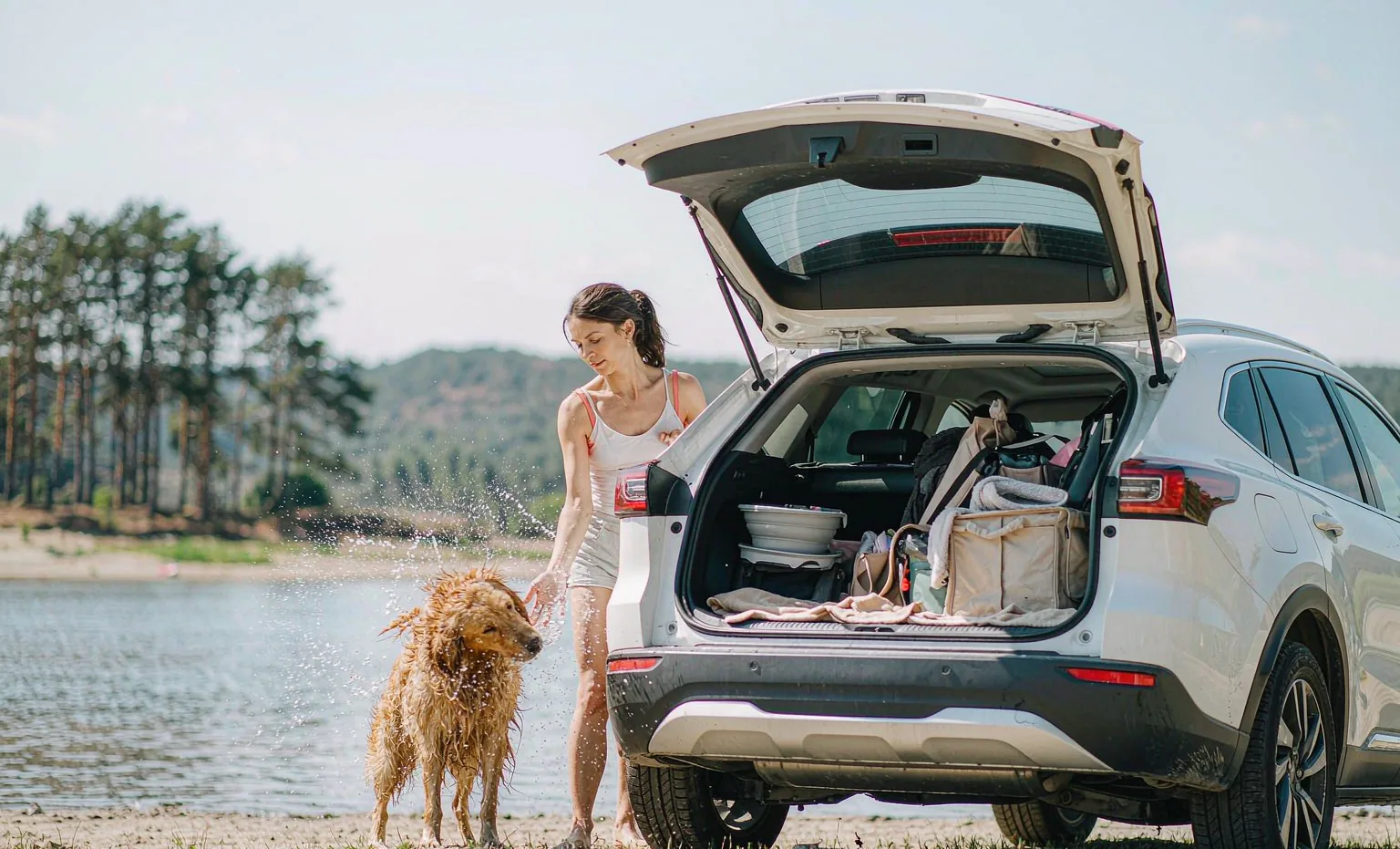
A wet dog plus a car interior is where lake days die. Two things make it sustainable: a cargo liner that doesn’t care about water and a towel that lives in it. Towel first, then a second dry towel for the seat she’ll inevitably choose, and water from the collapsible bowl before you pull out — drinking lake water all afternoon is not a plan.
Aftercare, in this order: ears dried (swimmer’s ear is the real risk, especially for floppy ears), paws rinsed of sand and algae, a full fresh-water rinse if you were in a lake with algae bloom warnings, and a boring evening. Then do it again in three days, while the memory is still good.
Signs she’s had enough
Shivering while the sun is still out, swallowing water, a frantic paddle that isn’t going anywhere, or a dog who keeps returning to the exit. Water dogs are made over weeks, not afternoons — the single most common mistake is letting a dog swim until she’s tired, which is how you get a dog who’s wary of water next season.
Questions about a dog’s first swim
Can all dogs swim?
Most can paddle, but “can” and “should” are different — heavy-chested breeds, short-nosed breeds and seniors tire fast. Use a dog life jacket for any dog who isn’t a confident swimmer, especially on a boat or a steep shoreline.
Should I use a life jacket?
Yes for first swims in deep water, boats, strong current, or any dog with a heavy chest. It’s cheap insurance and it makes the first season much calmer.
How do I keep the car from smelling after lake days?
Towel at the shore, a wipeable liner in the cargo area, and a full dry-out at home with the liner out of the car. Never leave a wet towel or a wet dog bed sealed in a vehicle.
Read next: getting a city dog trail-ready · the coast drive that rebuilt my setup. More in water and weekend, or see the season boxes.
More from Outdoor Pets
Part of Explore Together · Drive Together · Gear Lab · Season Boxes