The first freezing morning of the year always catches someone out: a dog who refuses to step onto frost, a car that takes ten minutes to warm up, road salt on paws that weren’t built for it. Winter driving with a dog is absolutely fine — it just runs on a slightly different routine than the rest of the year.
Here’s the version that has survived four winters and one very stubborn short-haired rescue.
Winter isn’t a season to stop driving. It’s a season to add three habits.
Habit one: the two-minute warm-up
Start the car before the dog gets in, not after. Two minutes of heat before anyone’s paws touch cold metal, then the dog loads into a car that’s already taking the edge off. It also means defrosting happens while you’re still in the house, which is the real win.
Habit two: the paw protocol
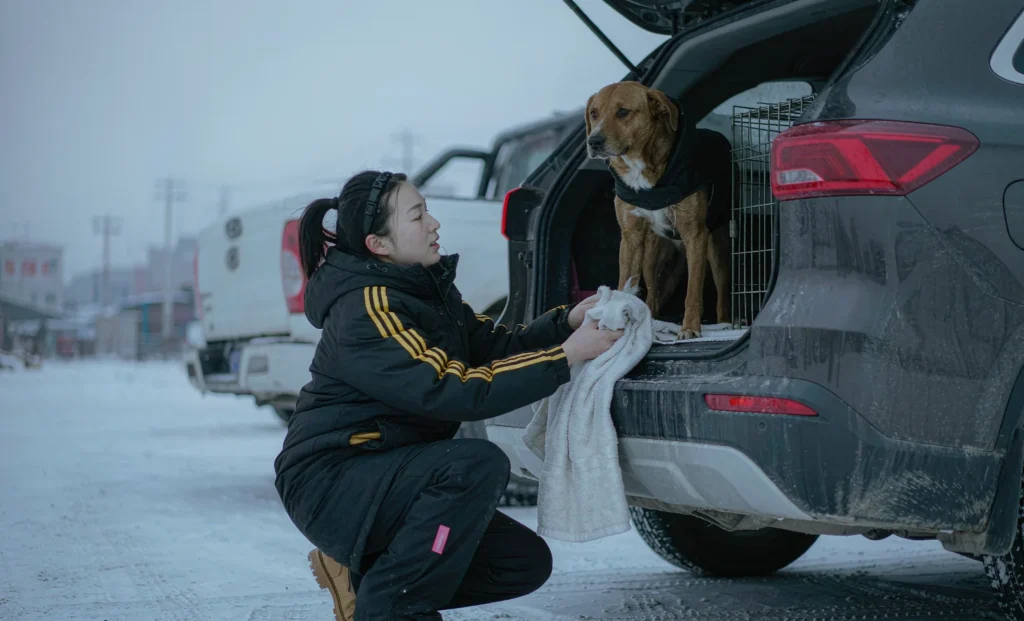
Road salt and ice-melt are the underrated winter hazard — chemical, abrasive, and unpleasant to lick off later. Keep a small towel in the door pocket and wipe all four paws before she gets in, every time. Thirty seconds, four paws, no exceptions. If you’re on a long drive, check pads at each stop for cracking or packed ice between the toes.
Habit three: the winter load-out
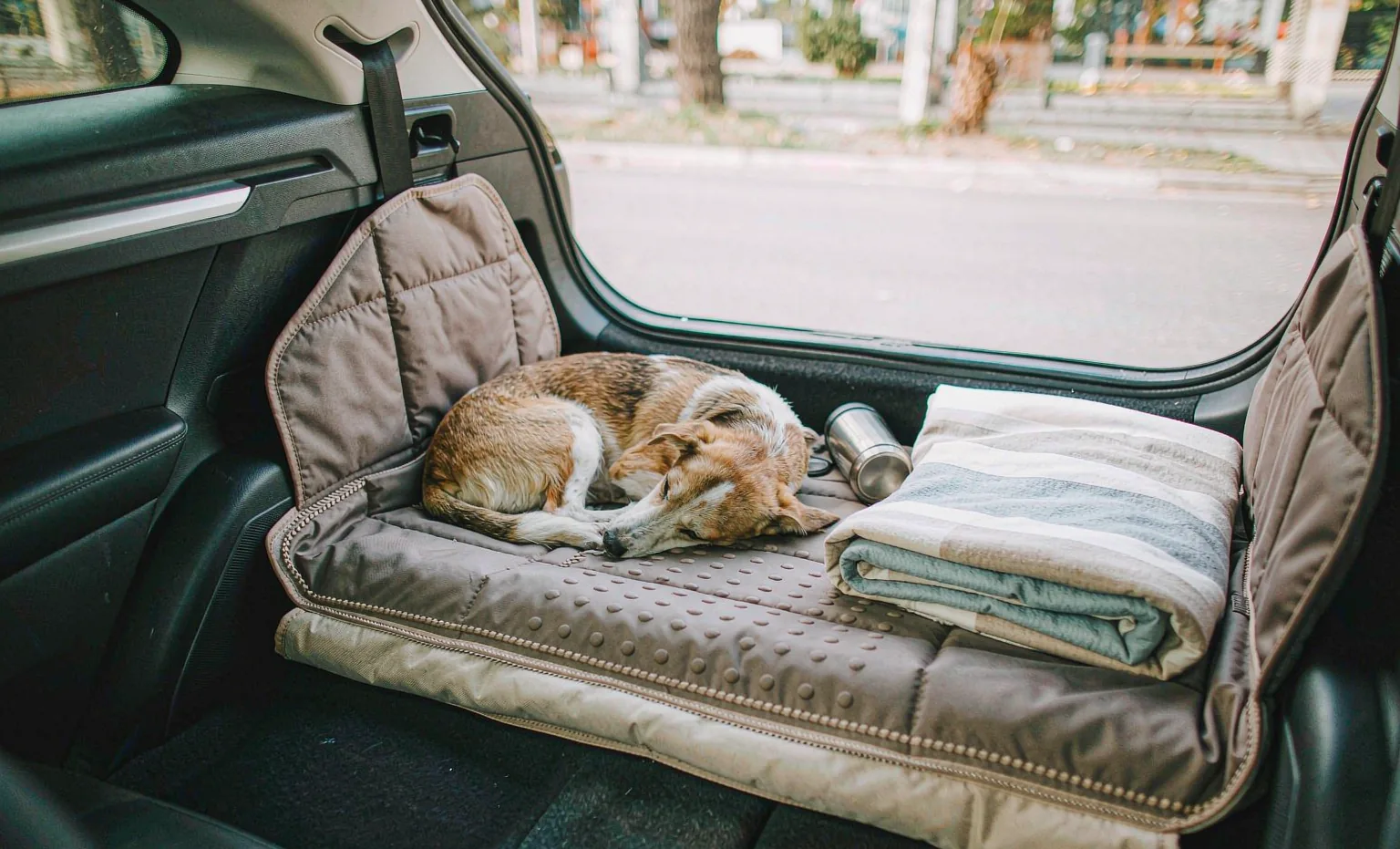
Warmth that stays put — quilted bench cover, $33.60
Cold upholstery pulls heat out of a dog fast, and a quilted layer is the cheapest warmth you can add. In winter I keep it on permanently and shake it out on the weekend.
The safest way for a big dog to ride — crash-tested vehicle crate, $178.00
Winter roads are the argument for real restraint. A crash-tested crate turns the worst-case scenario into one you’ve prepared for, and in cold months it doubles as a draft-free den in the cargo area.
Water that isn’t frozen — collapsible bowls, $7.60
Dogs get dehydrated in winter just as fast, and cold cars freeze water bowls. Fill from a thermos at stops instead of leaving a bowl in the car overnight.
The cold-weather rule that never bends: a car cools down far faster than it warms up. In freezing weather, the dog either comes with you or stays home — a parked car in winter is not a kennel, and cracked windows don’t keep a dog warm.
What winter driving is actually like with a dog
Quieter, mostly. Dogs who hate summer car rides — the ones who pant and pace — often love winter: cool air, no hot parking lots, empty trailheads, a car that smells like wet wool and woodsmoke. If you’ve been building the Saturday loop all year, winter is when it pays off, because the whole point of a loop is that it works in every season.
Questions about winter car safety for dogs
How cold is too cold to take a dog in the car?
Short drives are fine for most dogs if the car is warmed up and the dog is dry. Small, short-coated, senior and very young dogs have a much lower tolerance — for them, below freezing means errands only, no lingering.
Do dogs need boots for winter?
Not usually for a quick car-to-door trip, but yes for salted sidewalks, long walks on ice, or any dog who lifts a paw. Wipe paws after every winter drive regardless.
Can you leave a dog in a cold car?
Only briefly, only with the engine off and never overnight in freezing temperatures. Cars lose heat quickly; if you’d need a coat, so does she.
Read next: the Saturday loop · rebuilding a road-trip setup. More in winter and daily, or see the season boxes.
More from American Drive
Part of Drive Together · Explore Together · Gear Lab · Season Boxes