Camp is a strange environment for a dog: everything is new, nothing has a smell they recognise, and the boundaries they understand at home have disappeared. Most camping problems start in the first ninety minutes on site, which is exactly when everyone is too busy to manage them. Setting up in the right order fixes most of it.
A vehicle can make the journey feel like part of the adventure. It can take you from paved roads to a trailhead, campsite, or quiet overlook, but camping with a dog asks you to think beyond the destination. You are planning a shared system: a person needs access to driving controls and personal gear, a dog needs a calm and secure place to ride, and the vehicle needs to remain usable when the day includes dust, mud, rain, food, and camping equipment.
The best setup is not the one with the most accessories. It is the setup that makes ordinary transitions easy. Can you load without burying the leash? Can your dog settle before the next drive? Can you separate wet bedding from clean supplies? Can you pack camp equipment without blocking the driver’s view or creating loose objects in the cabin? These questions shape a better trip than a long shopping list.
This guide focuses on planning and organization for vehicle owners camping with dogs in the United States. vehicle generations, body styles, roof configurations, and cargo layouts vary, so inspect your own vehicle and follow the owner’s manual and equipment instructions. Nothing here replaces veterinary care, local campground rules, or product-specific guidance.
Match the Camp Plan to Your vehicle and Your Dog
Know the vehicle you actually have
A vehicle can be configured in several ways, and available cargo space changes with body style, seats, roof components, and passengers. Measure the space you intend to use rather than relying on a generic capacity assumption. Put the dog’s travel area, cooler, camp box, sleeping gear, and personal bags in the vehicle before departure. If the load only works when everything is perfectly placed, it may not work after a muddy stop or a quick grocery run.
Think about access as well as volume. The item that fits may still be difficult to retrieve. Keep the dog’s leash, water, waste bags, and towel near the door or other safe access point. Put heavy containers low and secure them so they do not shift. Keep the driver’s controls, mirrors, windows, visibility, and emergency access clear.
Choose a realistic camping style
A campground with a nearby walking route creates a different setup from dispersed camping or a weekend that combines driving and day hikes. Confirm current rules for dogs, leash use, fires, parking, quiet hours, and waste disposal. If you plan to sleep in or near the vehicle, check the rules and consider whether the arrangement will be comfortable for both you and your dog.
Start with a low-complexity overnight if your dog is new to camping. A familiar campground can reveal how your dog responds to tent sounds, headlights, other campers, wildlife smells, and a changed nighttime routine. Use what you learn to refine future trips.
Make the Dog’s Vehicle Ride Familiar
Practice the loading sequence
Your dog should not meet the entire camping system for the first time at the trailhead. At home, introduce the travel bed, crate, carrier, harness, barrier, or other arrangement you plan to use. Practice getting in, settling, stopping, and getting out. Keep the sequence consistent so the dog knows when a drive is beginning and when it is time to explore.
Use only a setup that is appropriate for your dog and vehicle and that does not interfere with driving. Follow the instructions supplied with the equipment. Inspect clips, straps, doors, and attachment points before each trip. Do not let the dog ride in a way that blocks the driver’s view, pedals, controls, or access to the vehicle.
Account for open-air configurations
If your vehicle has removable panels, an open-air configuration, or a changed roof arrangement, consider how the change affects sun, wind, dust, noise, rain, and the dog’s ability to remain secure. Never assume that an enjoyable open-air ride for a person is equally comfortable for a dog. Keep your dog’s head and body inside the vehicle while moving, and secure all loose gear.
Before leaving pavement, check that the dog’s travel area remains protected from shifting equipment. A calm loading routine is especially important when the surroundings are noisy or unfamiliar.
Build a Three-Zone Camping Load
Zone one: immediate dog access
The first zone holds what you may need at every stop: leash, spare leash, water, bowl, waste bags, towel, and a small amount of food if appropriate for your dog’s routine. Keep this kit compact and easy to identify. A bright bag or a consistent location can help a tired traveler find it quickly without opening every container.
Zone two: camp and activity gear
The second zone holds the items that support the day: bedding, tent or shelter supplies, cooking equipment, lights, hiking gear, and clothing. Group items by use rather than by ownership. One camp box can be easier to manage than several small bags, provided it can be lifted safely and does not create a loose projectile risk while driving.
Zone three: dirty or wet items
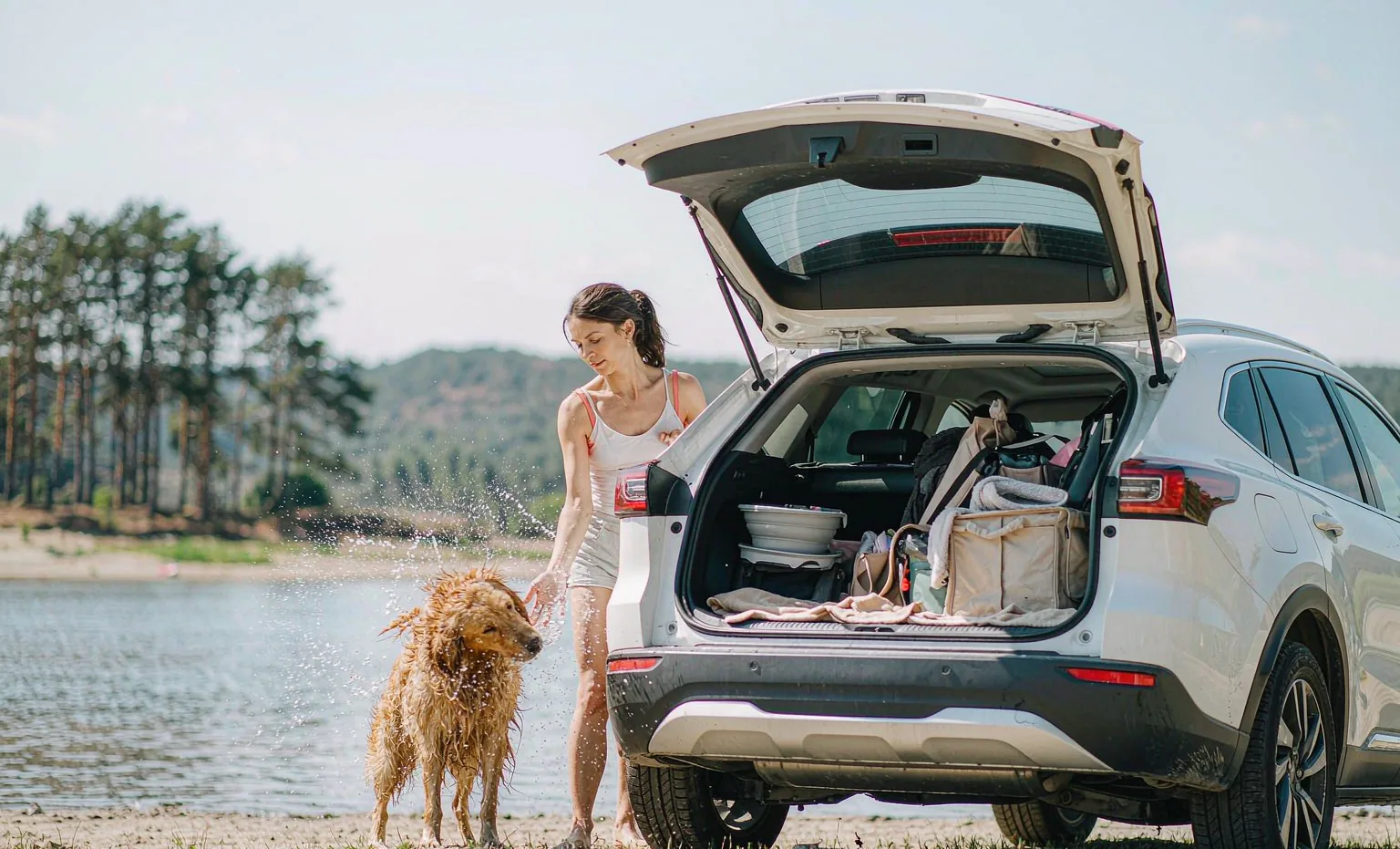
The third zone is for mud, wet towels, shoes, and used cleanup materials. Keep it separate from food and dry bedding. If the vehicle’s cargo area is exposed to weather or dust, use containers and covers appropriate to your setup, but do not block required vehicle functions. Empty this zone at the end of each day so a small mess does not become a permanent smell.
Pack the Dog’s Camp Kit
Bring the everyday supplies your dog already understands: food, water, bowls, medication, identification, leash, waste bags, and familiar bedding. Add a towel, paw-cleaning material, a light for nighttime visibility, and a brush or other grooming tool suited to your dog. Include a spare collar or leash if that makes sense for your trip.
Pack food in a sealed container and keep it away from wildlife access. At a campsite, do not leave food, bowls, treats, or scented waste unattended. Follow campground guidance for storing food and managing trash. A dog who is reliable at home may behave differently when exposed to new animals and smells, so maintain control during meal preparation and camp transitions.
Bring only toys that are suitable for the environment. A quiet chew or familiar comfort item may help a dog settle, while a toy that invites intense activity may not fit a crowded campsite. Watch how your dog responds rather than assuming a single item will solve every adjustment.
Set Up Camp Around Calm Transitions
Establish a home base
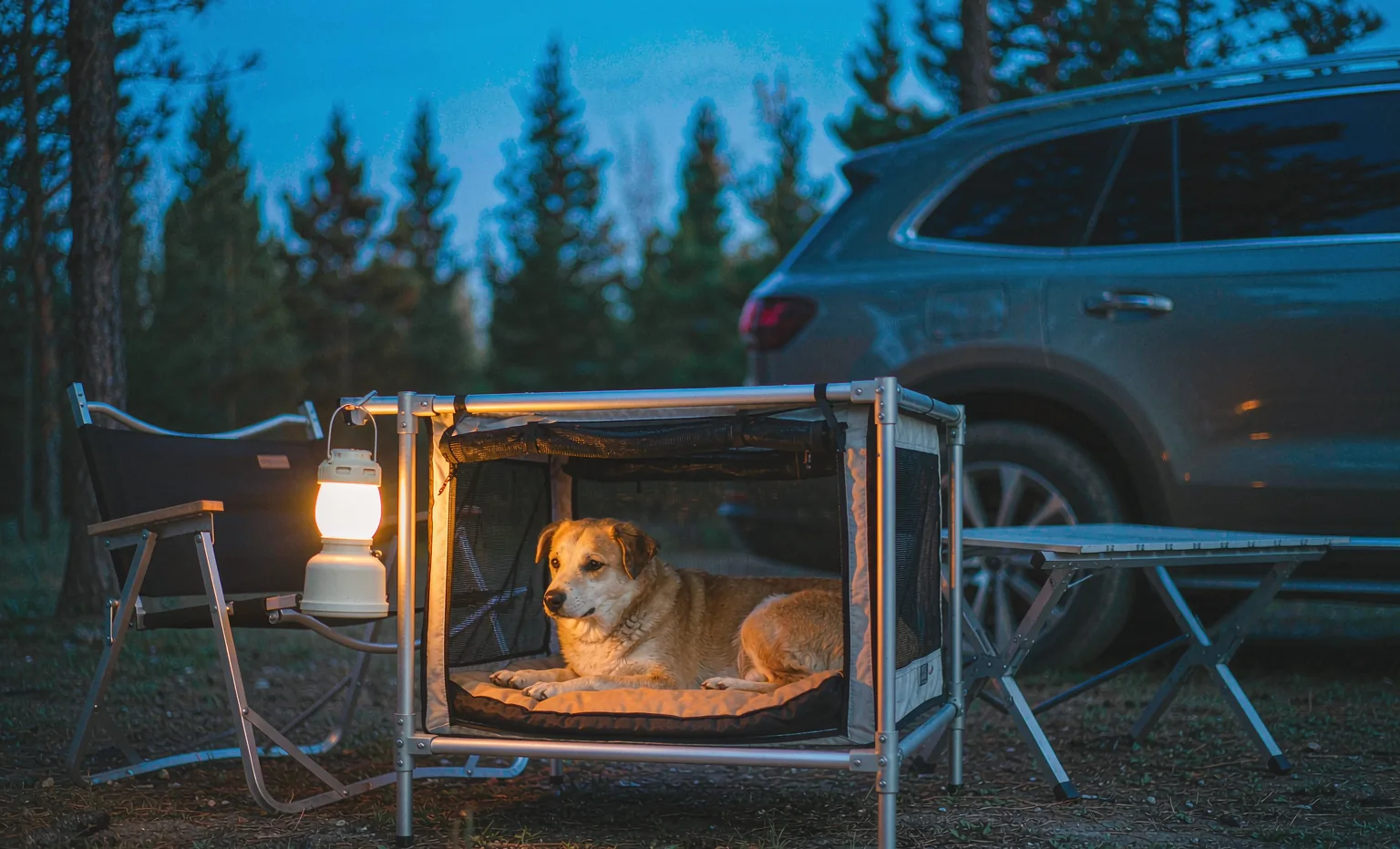
When you arrive, set up a defined place for the dog to rest. It might be a bed near your tent, a mat beside your chair, or another location allowed by the campground. Keep the same water and bedding together so the dog has a recognizable base. Avoid placing the rest area near vehicle traffic, cooking heat, or a path where people constantly pass.
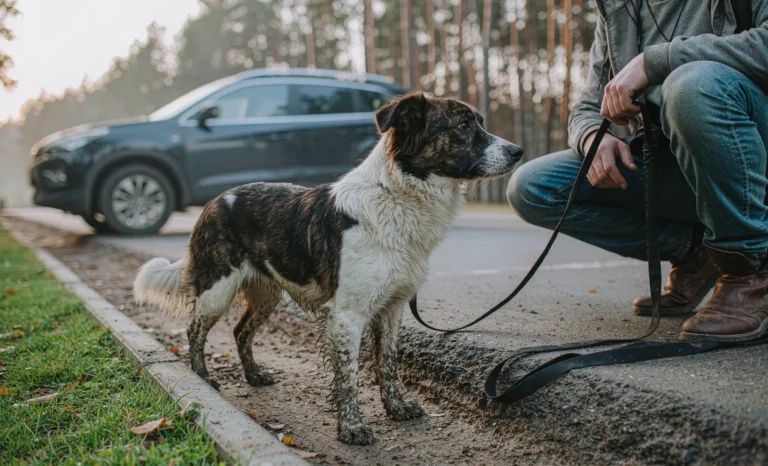
Use a leash arrangement that follows local rules and does not create a trip hazard. Never tie a dog where it can reach a hot stove, fire, road, other campers, or equipment that could entangle it. Supervise interactions with unfamiliar people and animals.
Separate exploration from rest
A camping dog can become overstimulated even after a long hike. Build quiet periods into the day. Let your dog sniff and explore appropriate areas, then offer a calm rest period before dinner or another drive. Watch for stress signals such as persistent pacing, hiding, excessive vocalization, unusual panting, or inability to settle. If you are concerned, reduce stimulation and contact a veterinary professional as needed.
Nighttime can be the most surprising part of camp. Headlights, wildlife sounds, wind, and neighboring campers may keep a dog alert. Keep the bedtime routine familiar, check the leash and identification, and avoid creating a late-night adventure simply because your dog heard something outside.
Plan for Dirt, Water, and Weather
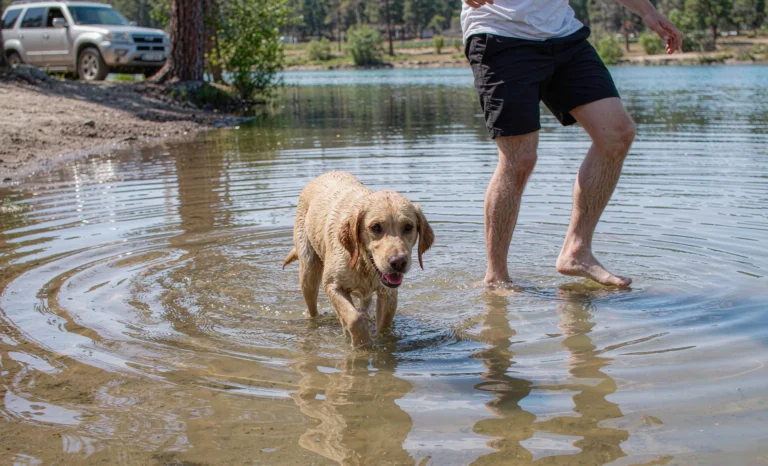
The vehicle may be built for outdoor travel, but a wet dog and wet equipment still require a plan. Place a towel at the vehicle entrance and another with the dog’s camp kit. After a swim or muddy walk, check paws, belly, ears, and coat according to your dog’s needs. Dry the dog before putting it back on bedding or into a confined travel area.
Weather can change the plan quickly. Heat, cold, rain, smoke, and storms affect both driving and camp comfort. Check the forecast before leaving and while traveling. Provide a dry, shaded, or otherwise appropriate rest area, and modify or cancel activities when conditions are unsuitable. Do not leave your dog unattended in a parked vehicle; a vehicle’s interior can become unsafe as conditions change.
If your vehicle is carrying an open or weather-exposed load, protect clean bedding and food in a way suited to your configuration. Confirm that covers, containers, and tie-downs do not interfere with lights, doors, visibility, or other vehicle functions.
Combine Driving Days and Hiking Days Carefully
A camping itinerary can become tiring when every driving day also includes a long hike, a new camp, and a complicated setup. Give yourself margin. A shorter activity may be better than forcing a full route after a long drive. Learn your dog’s recovery pattern and allow time for water, food, rest, and paw checks.
On trail days, confirm current access and pet rules. Keep your dog under control and respect other hikers, wildlife, and sensitive areas. Carry waste bags and pack waste out or dispose of it as directed. Choose routes that match your dog’s fitness and the surface conditions. If the trail becomes too hot, crowded, rough, or exposed, turn around.
When you return to the vehicle, use the same transition: leash, towel, water, paw check, then loading. Consistency prevents a muddy dog from jumping into a packed cabin before you are ready.
Create a vehicle Reset Routine
At the end of every day, remove wet towels and food scraps. Shake out bedding when appropriate, place dirty gear into the designated zone, refill water, and return the dog kit to its access location. Check that camp items are secure before driving. A reset protects the next morning from confusion and keeps the vehicle usable for ordinary errands after the trip.
After the camping weekend, unload everything rather than leaving the vehicle packed indefinitely. Inspect the dog’s travel area, wash or air out washable layers, clean containers, and check equipment for wear. Look at the vehicle’s floor, cargo surfaces, door pockets, and seat gaps for grit or moisture. The goal is not perfection; it is preventing a temporary adventure from becoming a lingering problem.
Common vehicle Camping Mistakes to Avoid
One common mistake is packing for the imagined trip rather than the actual one. Extra gear consumes access and can make the dog’s travel area less comfortable. Another is treating the vehicle as storage without creating a wet-gear zone. A third is introducing a new restraint or sleeping system at the campsite, where the dog and owner are already tired.
It is also easy to overestimate how much activity a dog needs. More miles do not always mean a calmer evening. Rest, routine, and a predictable base matter. Finally, avoid making assumptions about public-land rules, campground access, or vehicle fitment. Confirm current details and inspect your own vehicle before relying on a setup.
Think Through Recovery and Next-Day Readiness
Camping can make a dog appear ready for more activity because there are so many new smells and sounds. Instead of judging readiness by excitement, look at movement, appetite, sleep, hydration, and behavior. A dog who needs a quiet morning may benefit from a shorter walk around camp before a longer drive. Build a recovery option into the itinerary so you do not have to choose between an exhausting hike and an uncomfortable day in the vehicle.
The vehicle also benefits from a next-day check. Look for loose or wet equipment, mud around doors and floor areas, and items that could shift when the vehicle moves. Repack the load while there is daylight when possible. Keep the access kit on top, and put items that will not be used until home in a protected lower zone. If the route includes rough roads, recheck the load after the first section rather than assuming it stayed exactly where you placed it.
Before leaving camp, make a slow walk around the vehicle. Check the ground for dropped clips, bowls, food wrappers, and waste. Confirm that panels, covers, doors, and storage containers are in the intended position for your particular configuration. The point is not to perform a mechanical inspection beyond your knowledge; it is to catch ordinary campsite oversights before they become a problem on the road.
Plan for Shared Campsite Etiquette
A dog-friendly campsite is still a shared space. Keep barking, greetings, and movement from disrupting neighboring campers. Do not allow your dog to investigate another campsite or approach wildlife. Keep food preparation and pet feeding controlled, and store scented items according to the campground’s current directions. If your dog cannot settle, a quiet break inside an appropriate supervised setup may be better than repeatedly correcting behavior in a busy common area.
Think about lighting and visibility after dark. A small light can help people see a leash and identify where the dog is standing, but it should not be used to encourage roaming. Keep the nighttime route short, familiar, and controlled. Good campsite etiquette protects the experience for your group and makes it easier for other visitors to share the outdoors.
Keep a Small Backup Plan
A backup plan does not need to be elaborate. Know where you can stop if the weather turns, where you could shorten the hike, and how you would reach veterinary care if your dog became ill or injured. Carry a charged phone and keep important contact details available, but recognize that service may be limited in some outdoor areas. A simple route alternative, extra water, and one spare leash can make a change of plan much less stressful.
Leave Room for the Unplanned Stop
A little empty capacity is useful on a vehicle trip. You may pick up supplies, need to carry a damp jacket, or decide to add a short walk at a different trailhead. Do not fill every available space simply because it exists. A load with some flexibility is easier to repack, easier to inspect, and less likely to turn a small change into a full vehicle rearrangement.
Frequently Asked Questions
Can any vehicle work for dog camping?
vehicle body styles and configurations differ, and the right setup depends on your dog, passengers, equipment, and camping style. Test-load your own vehicle and keep the dog’s travel area clear. Do not assume a configuration or accessory fits without checking the exact instructions and vehicle details.
Where should my dog ride in a vehicle?
Use a travel arrangement appropriate for your dog and vehicle that does not interfere with driving. Follow equipment directions, keep the dog secure, and ensure the setup does not block visibility, controls, or emergency access. Practice before camping.
What is the most important camping item for a dog?
Start with the essentials your dog uses every day: water, food, leash, identification, medication, waste bags, and a familiar place to rest. Add activity-specific supplies only after those basics have a clear place in the load.
How do I keep a vehicle from becoming covered in mud and hair?
Use washable layers, separate dirty gear from clean bedding, carry towels, and reset the vehicle after each activity. A simple zone system is often more effective than trying to prevent every speck of dirt.
Is camping suitable for a nervous dog?
It can be, but the experience should be gradual and flexible. Start with short practice outings, choose a quiet setting, maintain familiar routines, and monitor your dog closely. Ask a veterinarian or qualified behavior professional for individualized guidance if your dog shows significant distress.
CTA
Your vehicle can be the link between everyday life and the outdoors without becoming a disorganized storage bin. Start with a familiar dog travel routine, a three-zone load, and a calm camp base.
Where should my dog sleep?
In the tent with you, or in a closed shelter you can reach in seconds. Never staked out where barking at wildlife will become your neighbours’ problem — some dogs cannot settle with animals moving around outside, and that is not fixable on the first night.
How do I stop the barking?
Exhaustion helps more than correction. A dog who has had a long walk before dusk settles faster than a dog who has been sitting in camp all afternoon. Manage the day, not the noise.
Read next: the first night · Outdoor Pets · a crate for camp. Start from Drive Together for the everyday rides, or the Gear Lab to compare before you buy.