- JustForAuto home — link the first mention of vehicle-first gear.
- JustForAuto blog — link readers to related care and travel guides.
- Contact JustForAuto — use for questions about available product information.
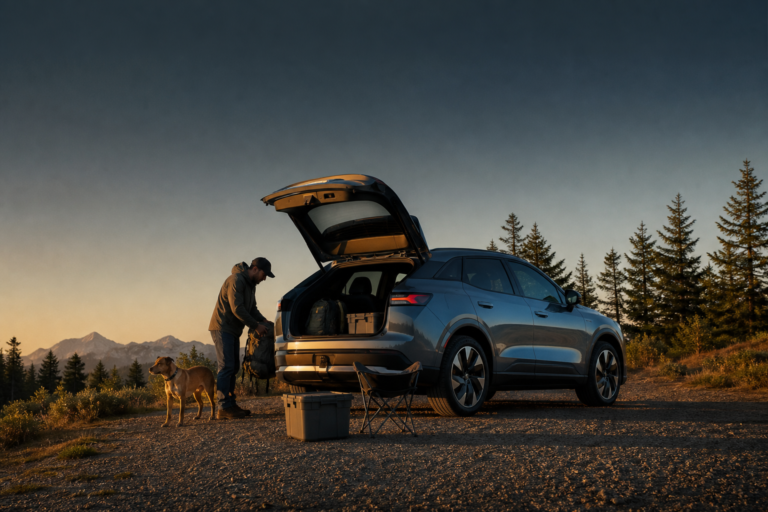
A dog climbing into the back seat can turn an ordinary drive into a small expedition. There may be muddy paws, a water bowl, a favorite blanket, a leash, and a human passenger who still needs room to buckle in. A cat carrier may occupy a different part of the vehicle, while a weekend at the trailhead adds boots, packs, and damp towels. Pet travel gear is meant to make these moments easier, but only when the gear works with the vehicle it enters.
That is why fitment deserves attention before color, material, or a product photograph. Fitment is the relationship between a piece of gear and the space, hardware, surfaces, and use pattern of a particular vehicle. It includes more than whether an item can be placed inside the cabin. A cover may reach across the seat but interfere with a seat belt. A liner may look large enough but leave an exposed corner around a seat hinge. A barrier may be positioned correctly in one vehicle and awkwardly in another because of headrests, trim, or a sloping roofline.
JustForAuto approaches vehicle lifestyle from the vehicle outward: understand the car, understand the people and pets using it, then choose gear that supports the routine. This article offers a practical way to think about fitment without relying on assumptions about a make, model, year, pet, or product. It is a planning guide, not a substitute for the manufacturer’s current instructions or a vehicle-specific confirmation.
What “fitment” means in a pet-travel context
In automotive conversations, fitment can sound like a technical term reserved for parts. For pet travel, it is equally useful because soft goods and organizers still occupy defined spaces and interact with vehicle features.
Size is only the starting point
Length, width, and height are obvious measurements, but they do not tell the whole story. A rear bench can have a wider cushion than the usable area between door panels. A cargo floor may be interrupted by a raised lip, a split-fold seat, or a removable panel. A front passenger footwell can have a shape that reduces the space available for a carrier even when the headline dimensions seem adequate.
Measure the area you intend to use, not a nearby area that looks similar. For a seat cover, note the seat cushion, seatback, door-side edges, center section, and any gap where the cover might need to tuck. For a cargo liner, measure with the seats in the positions you normally use. If the second row folds, measure both the everyday configuration and the expanded configuration. Record the smallest usable dimension when a flexible product must work in both arrangements.
Shape and access matter as much as dimensions
Vehicles are full of curves, angles, seams, and moving parts. A cargo floor can taper toward the hatch. A seatback can be split into sections with separate release points. Door openings can be narrower than the interior space. These details affect how gear enters the vehicle and how it can be adjusted once inside.
Consider access points in advance. Will you need to open a door to reach a strap? Can you remove the gear without asking a pet to move? Does a cover need to remain attached when a passenger uses the seat? Does a liner need to stay in place while the cargo area is being loaded? The best theoretical fit is not useful if the daily process is awkward.
Why a generic “one size” promise needs a closer look
A flexible product can be practical across many vehicles, but “universal” should not be treated as a guarantee of an identical result in every cabin. Universal usually describes an intended range, not the elimination of all variation.
Vehicle layouts are not interchangeable
Two vehicles may both be described as SUVs, sedans, pickups, or crossovers while offering very different interior layouts. Seat widths, headrest locations, cargo openings, floor heights, and attachment points can vary. Even vehicles with similar exterior dimensions may have different usable interior space because of trim, wheel wells, storage compartments, or seat mechanisms.
The same is true within a vehicle family. A model can change between years, and a trim level can alter the seat shape or available hardware. If a listing provides a fitment chart, use the exact information provided rather than inferring compatibility from a similar-looking vehicle. If the listing does not provide enough detail, collect the measurements and ask the seller for clarification before ordering.
“Fits inside” is a low bar
A mat that physically fits may still cover an access point, block a latch, or bunch up where a pet steps. A hammock-style seat cover may span the bench but leave a gap near the doors. A storage box may fit the cargo floor but prevent the hatch from closing. Fitment should answer a more useful question: can the item perform its intended role in this vehicle without creating a new inconvenience?
That question is particularly important for pet travel because people often need simultaneous access to humans, animals, cargo, and vehicle controls. Gear should not be evaluated in isolation from that whole routine.
The vehicle features to inspect before choosing pet gear
A short inspection can prevent many avoidable mismatches. Use the vehicle’s actual configuration, including the positions in which you usually travel.
Seats, belts, and headrests
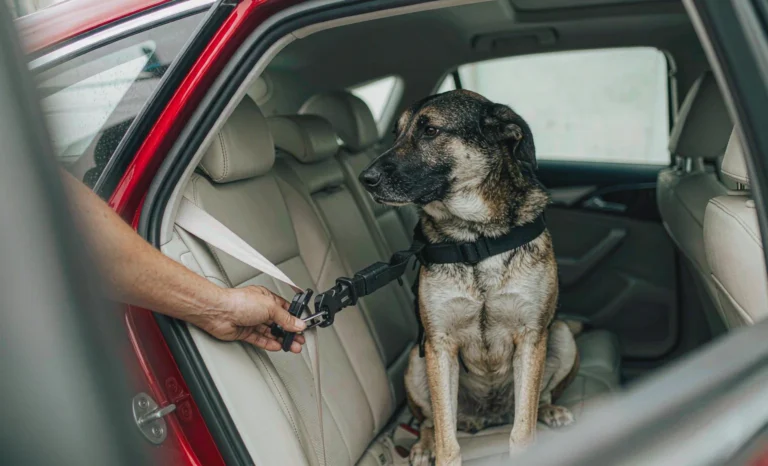
Look at the number of seating positions you need to keep available. A seat cover that spans the entire bench may suit a pet-only trip but be less suitable when a person must sit beside the pet. Check where the seat belts emerge, whether belt buckles are fixed or recessed, and whether headrests can be used for straps or handles. Do not assume that a cover or tether is compatible with a restraint system; follow the product instructions and vehicle documentation.
Notice how the rear seat folds. A split seat may require a cover with separate sections or an arrangement that keeps the unused seat functional. If a cover is designed to attach around headrests, confirm that the headrests and attachment locations match the instructions. A photograph can help you remember the layout when comparing options, but it does not replace measuring.
Door openings and trim
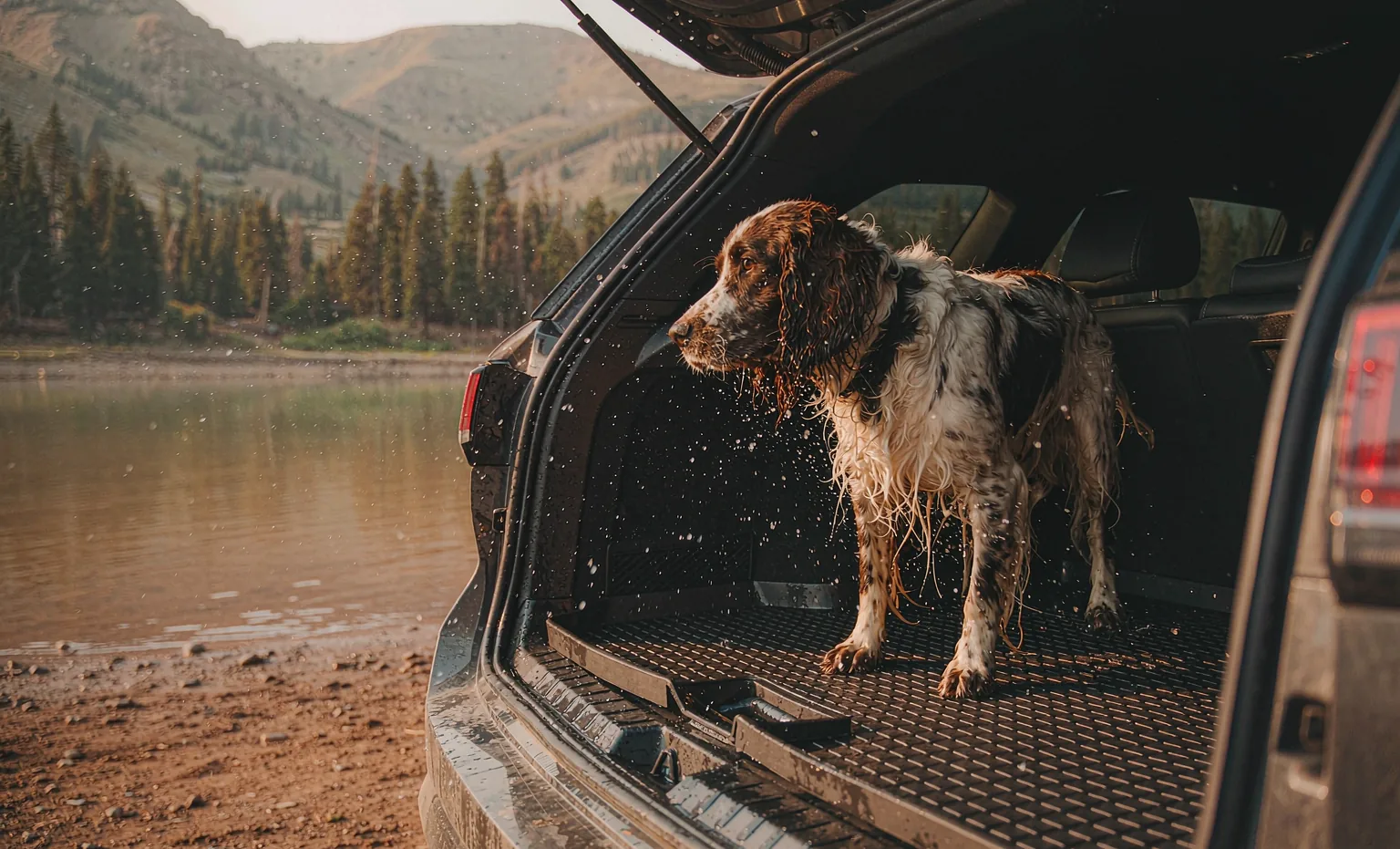
A pet may enter through a rear door, hatch, or side door. The opening determines how a carrier, ramp, or bulky folded cover can be loaded. Interior trim can also create narrow areas where a loose edge catches or where a pet’s claws can reach exposed material.
Open the doors and hatch while inspecting. Identify raised plastic panels, speaker grilles, seat-release handles, cargo hooks, and weather seals. Gear should not be forced against a seal or positioned so that it prevents a door from closing normally. If an item uses straps, check whether the intended route passes near a sharp edge or a moving hinge.
Cargo floors and seat hinges
A cargo liner may need to cover a flat floor, a step, a seatback, or a threshold. Measure the floor with a ruler or tape measure, then note changes in height. A liner that is too short may expose the threshold; one that is too large may fold into the door opening. Neither result should be assumed acceptable without checking the design and instructions.
If you regularly fold seats, take a photo with the seats up and another with them down. The two arrangements may require different coverage. Think about what you are protecting: the floor, the seatbacks, the side walls, or all three. A product designed for one area may not be intended to cover another.
A simple fitment workflow for pet travel gear
You do not need a complicated spreadsheet. A repeatable five-step process is enough for most buying decisions.
1. Describe the trip, not just the pet
Write down the common journey: short errands, long highway drives, trail days, vet visits, or overnight trips. Note whether a human passenger rides beside the pet, whether the cargo area carries outdoor equipment, and whether wet or dirty items are routine. The trip determines which vehicle spaces must remain available.
2. Choose the working position
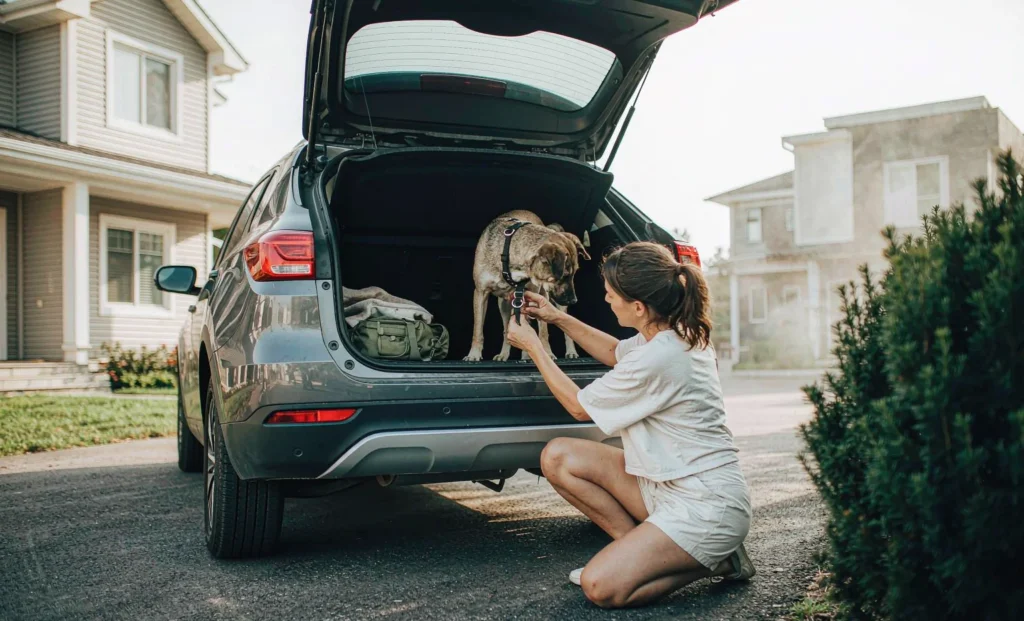
Decide whether the pet travels in a carrier, on a rear seat, in the cargo area, or in another arrangement recommended by your veterinarian and the product instructions. Do not let a product advertisement choose the position for you. The right gear depends on the space and routine you have selected.
3. Measure and photograph
Record the usable length, width, and height. Photograph the seat or cargo area from several angles, including attachment points and obstacles. A note such as “cargo floor narrows behind wheel wells” is more useful than a single overall measurement. Keep the notes with the product page or listing so you can compare them later.
4. Compare the specifications and exclusions
Read the product dimensions, attachment method, care instructions, and any stated limitations. Look for details about split seats, headrests, door coverage, adjustable sections, and access to belts or anchors. If a specification is missing, treat it as unknown rather than assuming it is included.
5. Plan the first installation
Before the first trip, install the gear in the stationary vehicle. Test the doors, hatch, seat movement, belt access, and normal loading route. Confirm that the pet can enter and settle in the intended space without the gear shifting into a doorway or blocking a control. If something does not work, stop and resolve the fitment question instead of improvising during a trip.
Fitment is also about the pet’s behavior
A vehicle has fixed dimensions, but pets have individual habits. One dog curls up; another changes position frequently. One cat settles in a carrier; another needs a quieter, more enclosed arrangement. A large pet may need more turning room, while a small pet can still create a mess that reaches beyond a mat’s edges.
Consider movement, claws, shedding, drool, and water. A cover with a convenient opening for a seat belt may matter more than maximum coverage if a passenger uses the seat regularly. A liner with a raised edge may be useful for a messy routine, but the opening and folding system still need to match the vehicle. Avoid describing any feature as a guarantee of comfort or protection; evaluate how it supports your particular routine.
It is also wise to separate containment from surface protection. A seat protector can help manage hair and dirt, but it is not automatically a restraint. A cargo liner can make cleanup easier, but it does not establish that a pet is secure in the cargo area. Use each item only as intended and consult qualified professionals for animal-specific travel questions.
Common fitment mistakes and better alternatives
Mistake: measuring only the cushion
The cushion is one part of the space. Include the seatback, side gaps, doors, and any area the product is designed to cover. Better alternative: measure the complete use zone and identify what must remain accessible.
Mistake: copying another owner’s vehicle setup
A friend’s vehicle may look similar while differing in seat proportions, trim, or attachment points. Better alternative: use another setup as inspiration, then verify your own vehicle’s measurements and instructions.
Mistake: ignoring the human passenger
A pet-only arrangement may fail when a child, friend, or co-driver needs the adjacent seat. Better alternative: test the most common mixed-use configuration before committing to a full-width product.
Mistake: waiting until departure to install gear
A hurried installation can hide blocked buckles, twisted straps, or an inaccessible latch. Better alternative: do a dry run, then repeat it with the items normally carried on a trip.
Mistake: treating photos as proof of fitment
Online photos show one vehicle and one arrangement. They cannot confirm yours. Better alternative: use images to understand design, but rely on current specifications, measurements, and seller guidance for compatibility.
When to ask for clarification
Ask before buying when the product description does not identify the relevant dimensions, when your vehicle has an unusual seat or cargo layout, or when the instructions do not explain how the gear interacts with belts, headrests, or seat folding. Include the vehicle’s make, model, year, body style, exact measurements, and a clear description of your intended use. Avoid sending personal information that is not needed for the question.
A useful question is specific: “My cargo floor measures ___ at the widest point and ___ at the hatch. The second row is split ___/___, and I need one section to remain usable. Which listed configuration should I compare?” Specific information gives the seller a better chance to provide a useful answer without guessing.
A vehicle-first way to shop with JustForAuto
Vehicle-first shopping does not mean buying the most elaborate setup. It means starting with the vehicle’s real spaces and the people and pets who use them. Begin with the routine, identify the surfaces and access points that matter, then compare products against those requirements. The process helps you spend attention on compatibility instead of relying on broad labels.
For more ideas, browse the JustForAuto home and the JustForAuto blog. If you need information that is not clear on a listing, use the JustForAuto contact page and provide your measurements and intended configuration. Always confirm the current product information before publication or purchase.
A final fitment review before the first trip
Once you have chosen a product, repeat the fitment check after it arrives. Packaging dimensions and finished dimensions are not always the same, and the vehicle may look different when the cover, carrier, or normal cargo is present. Lay out the gear, compare it with your notes, and install it without a pet inside. Confirm that attachment points are reachable, edges are not trapped in doors, and the intended seats still move as expected.
Then simulate a normal loading sequence. Bring the leash, carrier, towel, water plan, and one typical piece of luggage into the vehicle. This rehearsal reveals whether the setup is intuitive when your hands are full. If the product leaves an exposed area that matters to your routine, document it and contact the seller rather than silently changing the product’s intended use.
Fitment is not a one-time purchase decision. It can change when a vehicle receives a new seat cover, cargo accessory, child seat, liner, rack, or other interior equipment. Recheck after major changes and keep the measurement notes current. A few minutes of review can preserve the practical value of a setup that supports many different journeys.
Frequently asked questions
Does a universal pet seat cover fit every vehicle?
No single label can confirm a perfect fit for every vehicle. Compare the cover’s dimensions and attachment method with your seat width, headrests, belt access, doors, and intended seating configuration. Confirm unclear details before buying.
What should I measure for a cargo liner?
Measure the usable cargo floor length and width, the opening or threshold, the height of any raised edge, and the space created when seats are folded. Note wheel wells, side panels, hinges, and hatch clearance. Use the product’s own measurement guidance when available.
Can a seat protector replace a pet restraint?
A protector is generally intended to manage hair, dirt, moisture, or wear on a surface. It should not automatically be treated as a restraint. Follow the restraint manufacturer’s instructions and vehicle documentation for the travel arrangement you choose.
How can I tell whether a cover will work with a passenger?
Install it in the vehicle and place the seat in the position the passenger will use. Check access to the buckle, seat adjustment, doors, and any required attachment points. If the cover is designed for a different configuration, choose a product or setup that clearly supports mixed use.
Should I measure a vehicle before every purchase?
If the product uses a different area, yes. Keep a simple vehicle measurement record, but verify that it still matches the current seat layout and product instructions. Model-year or trim changes can make old assumptions unreliable.
Make every trip start with the right fit
Pet travel is a shared activity between a human, a vehicle, and an animal. When gear fits the vehicle’s spaces and the trip’s real demands, loading becomes more predictable and cleanup becomes less disruptive. Measure first, test the installation while parked, and treat unknown compatibility as a question to resolve—not a detail to guess.
Ready to plan your next setup? Start at JustForAuto, compare the gear with your vehicle’s measurements, and build a travel routine that leaves room for both the journey and the life waiting at the destination.
Read next: cargo liner vs seat cover · the everyday dog kit audit
More from Gear Lab