Somewhere around the fourth time I dug a spare leash out from under the spare tire, I realized the trunk of my car had become a museum of things I bought for the dog and never used. So I did an audit. Everything came out, everything got judged, and only what survived sixty days of actual daily driving earned its place back.
This is that audit. If you drive with a dog most days — commutes, errands, the evening park loop — this is the version of the kit that survived contact with reality.
An everyday kit is judged on Tuesday mornings, not on Instagram.
The audit rule
One question per item: was it used on an ordinary day in the last two months? Not on the camping trip. Not in the photo. On a Tuesday, in the rain, in a parking lot, before coffee. Gear that only earns its keep on adventures belongs in the adventure bin, not the daily kit.
The keepers
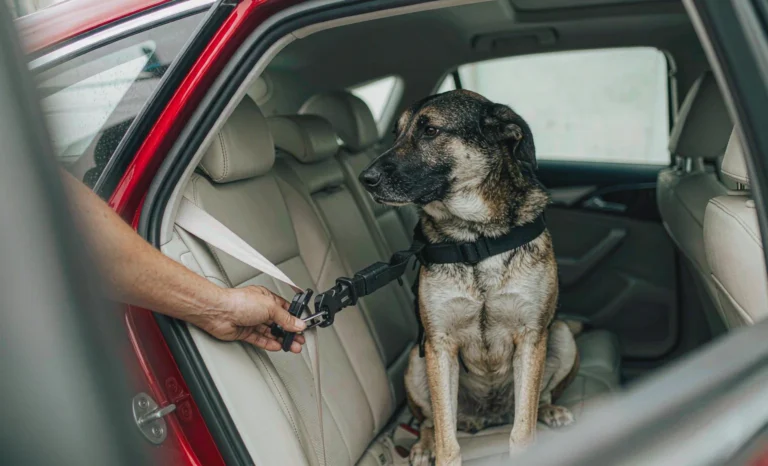
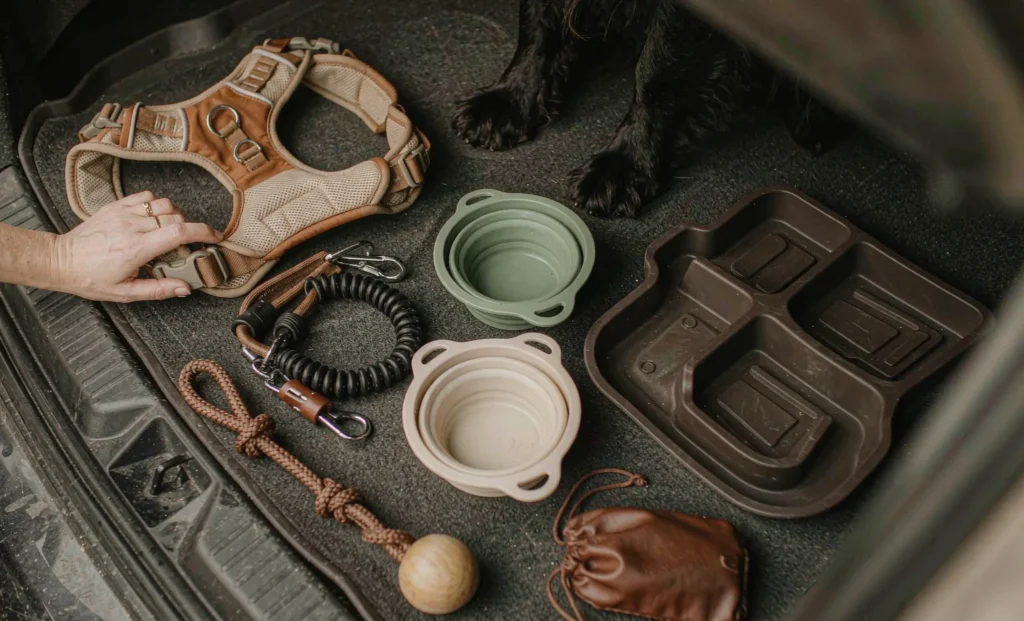
Breathable mesh harness — $25.60
She wears it every drive, which means it has to be comfortable enough to forget about. The mesh backs down to nothing on warm days, and the handle on top has quietly become the most-used feature: one grab at curbs, at the vet, at the groomer’s door.
Hands-free bungee leash — $15.80
Not for running, ironically. For the ten seconds when you’re carrying groceries, a coffee, and a leash, and the dog sees a squirrel. The bungee absorbs the lunge; your shoulder doesn’t. It lives hooked to the headrest.
Collapsible bowls (2-pack) — $7.60
One for water, one for the occasional roadside breakfast. They clip to the kit bag and weigh nothing. Cheapest thing in the kit; used almost every day.
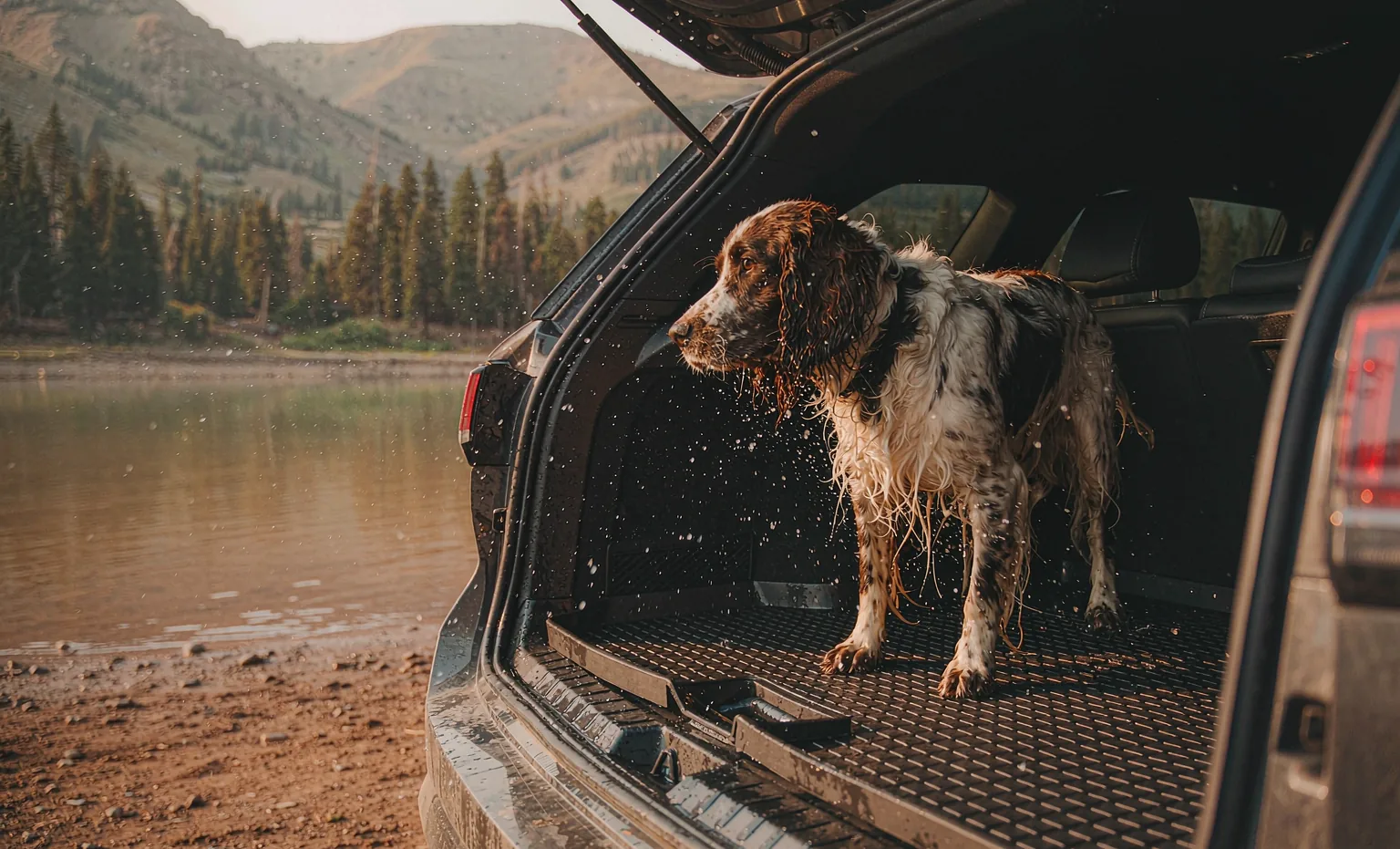
TPE cargo liner — $45.00
The daily kit’s foundation. Muddy paws, a spilled pup cup, a bag of potting soil from the hardware store — the liner doesn’t care. Wipe it, done. If you buy one thing from this list, it’s this.
Rope and rubber chew set — $10.80
For the vet lobby, the drive-thru line, the friend’s house. A familiar chew object turns a strange room into her room. Two textures because dogs, apparently, have opinions.
The cut, with honor
Four items got sent home. A folding travel bed she slept beside, never on. A luxury dog water bottle that takes four hands to operate. A second leash identical to the first, because I forgot I owned the first. And the big one: a back-seat hammock I kept for road trips — not because it’s bad, but because the quilted bench cover does the everyday job better and takes fifteen seconds to shake out.
Total cost of the surviving kit: about $105. Less than one tank of gas, and it removed every friction point between “want to go somewhere” and “already in the car.” That ratio — cost against friction removed — is the only gear metric I trust anymore.
How the kit is stored
Everything except the harness (which the dog wears) and the liner (which lives on the floor) fits in a single tote that never leaves the car. Restock day is the first Saturday of the month: check treats, check poop bags, wipe the bowls, done. The system has one rule — if it’s in your hand on the way out the door, the kit failed.
Questions about daily-drive dog gear
Do I need seat protection for daily errands, or just trips?
Daily. The cargo liner earns its cost on ordinary Tuesdays — one spilled latte or muddy-paw day pays for it. Trip-specific protection is a bonus, not the point.
How do you keep a car dog kit from smelling?
Washable everything, a towel in the tote, and a monthly restock that includes emptying the whole bag. Bowls get rinsed after every use — thirty seconds, worth it.
Is this kit different for a small dog?
The categories don’t change; the sizes do. A small dog still needs a surface, water, containment at curbs, and something to chew. Everything here scales down cleanly.
The full Gear Files archive lives over here — or browse the daily scene to kit out your own Tuesday.
Read next: cargo liner vs seat cover · why fit matters
More from Gear Lab