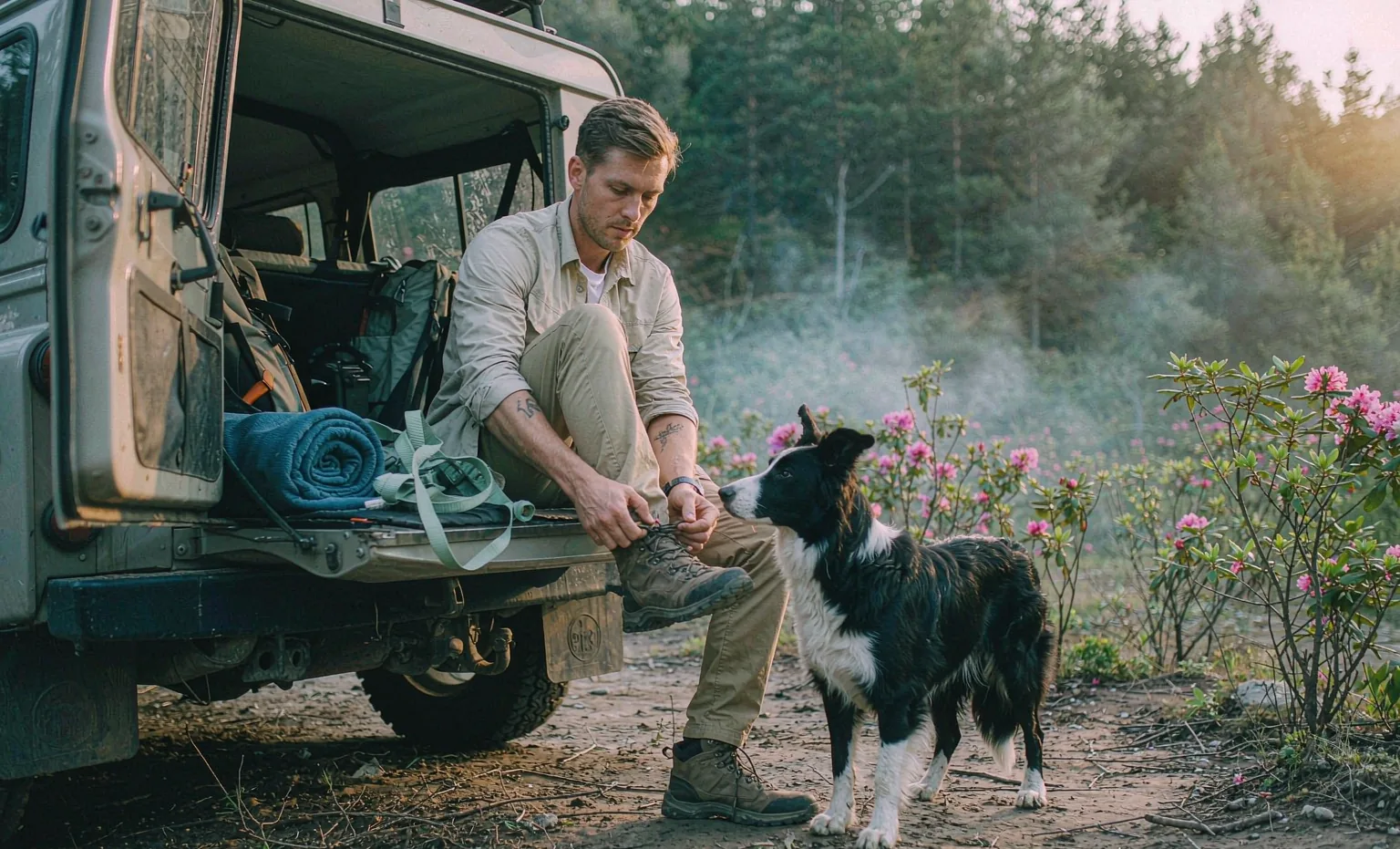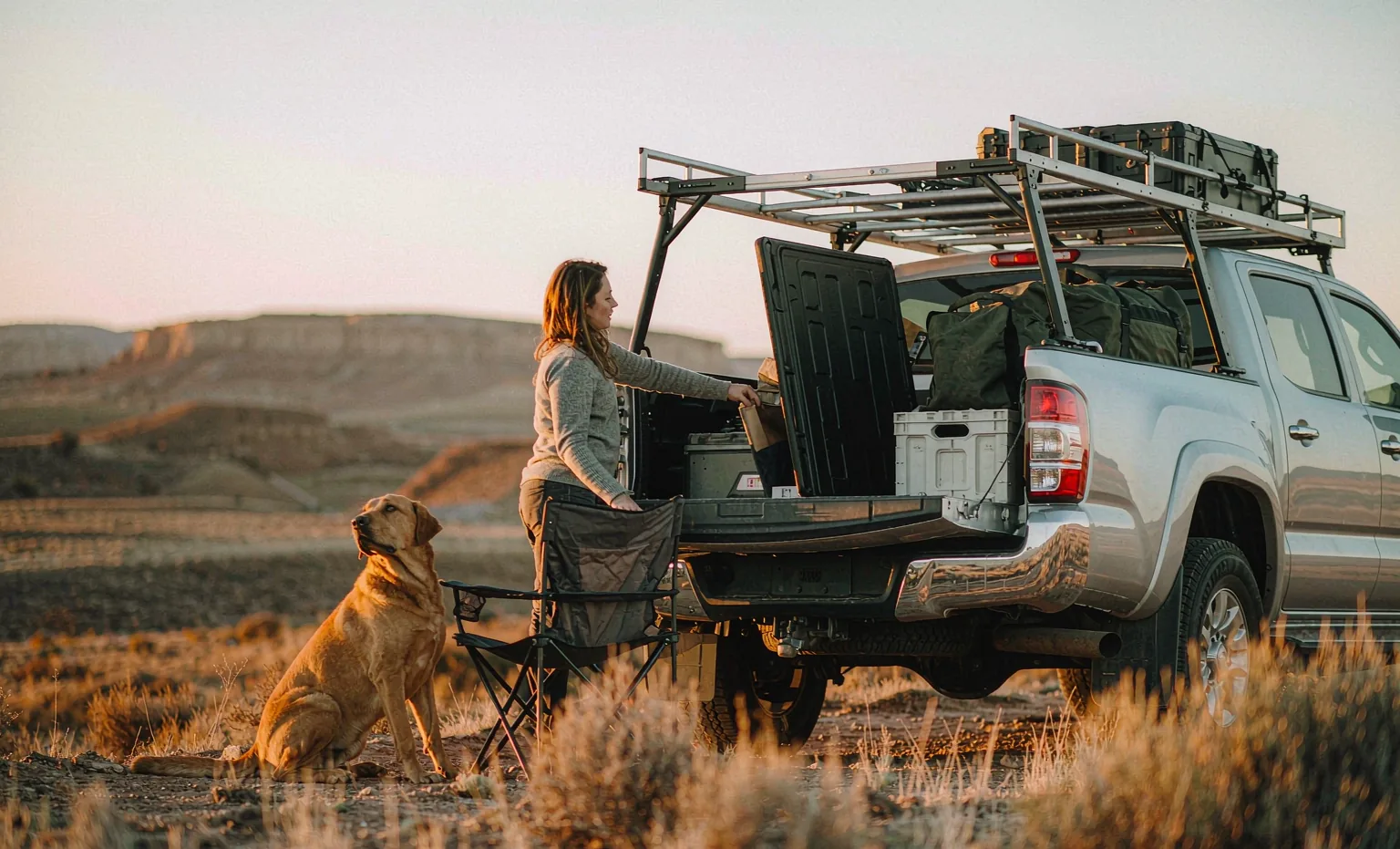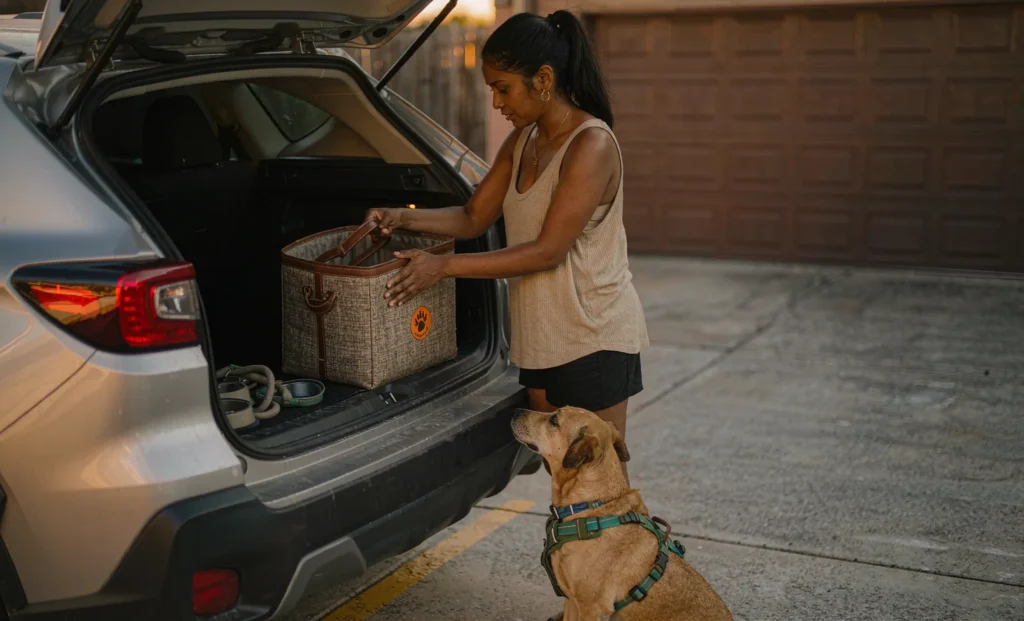
I used to plan dog road trips the way you’d plan a move: lists, tabs, a spreadsheet that made me feel responsible and slightly tired. Then I noticed the trips that went best were the ones I’d decided on the night before. So I rebuilt the whole thing around one constraint — twenty minutes, from decision to driving away.
This is that system. It’s not minimalism; it’s staging. Everything a dog road trip packing list needs either lives in the car permanently or sits in one tote by the door. Nothing requires a decision at 5 a.m.
Good planning isn’t more preparation. It’s fewer decisions left for the morning.
The night before: ten minutes, three moves
The evening before a drive, I do exactly three things. One: fill the water container and put it in the tote. Two: check the treat supply and top it off. Three: put the harness and leash on the tote, not on the dog — because the dog will be asleep and the gear should be where my hand lands first.
That’s it. If the trip needs more than that, the trip is too complicated and I’ll resent it by hour three. The six-hour drive that rebuilt my whole setup started with exactly this much planning, and the only thing that went wrong was the part I improvised.
What the car keeps permanently
The permanent kit is the reason the load-out is twenty minutes instead of two hours. Everything below never comes out, and it’s the same kit I audited in what actually lives in my car — the road-trip version just adds two things.
A crate that folds flat — folding travel crate, $59.60
This is the road-trip-only item, and it earns its space on any drive with an overnight stop. A crate turns a hotel room, a friend’s spare room, or the cargo area itself into a place the dog already understands. It folds flat when you don’t need it.
A carrier for the in-between moments — soft-sided carrier, $49.80
Lobbies, elevators, restaurant patios, the fifteen minutes before check-in. On trips that mix driving with a flight home, it’s the one piece that works in both worlds.
Water that doesn’t spill — collapsible bowls, $7.60
Two, because one is always dirty. Packed flat in the tote, rinsed at every stop, never a decision.
The four checks before you pull out
- Surface check. Is the cargo liner down and flat? If not, nothing else matters.
- Clip check. Harness on, leash clipped, before the door opens — every time, even in your own driveway.
- Water check. Container full, bowl reachable from the driver’s seat.
- Weather check. Not tomorrow’s forecast — today’s pavement temperature at your first stop.
The rule that took me longest to learn: if something on the list requires you to walk back into the house, you didn’t stage it. Put it in the tote tonight and let tomorrow be easy.
What I stopped packing
Three things came off the list for good. The dog bed — she sleeps on whatever is softest, which is never the bed. The second leash — redundancy I never used once in two years. And the elaborate first-aid kit, replaced by a flat pack of gauze, tape and a phone number, because the elaborate version only ever made me feel prepared.
Questions about planning a road trip with a dog
How far ahead should you plan a dog road trip?
One evening. Book accommodation that accepts dogs in advance, but keep the daily plan loose — a dog’s good day is worth more than a tight itinerary.
Do you need a crate and a seat cover?
Crate for containment at stops and overnight; surface protection for the drive itself. They solve different problems, and most road-trippers end up carrying both.
What’s the most forgotten item on a dog road trip packing list?
Water at rest stops, followed closely by a towel. Both live in the permanent kit for exactly that reason.
Read next: getting a city dog ready for a real trail · the Saturday loop. More in road trip and weekend, or see what we pack in the season boxes.
More from Road Stories
Part of Explore Together · Drive Together · Gear Lab · Season Boxes