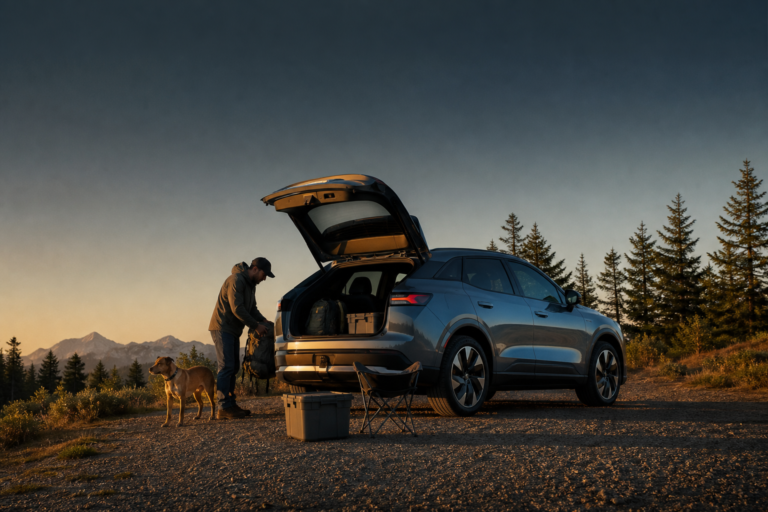
For four years my dog rode in the cargo area, and for four years I told people it was the better choice. Then she turned eleven, stopped jumping, and started standing at the rear door looking at me instead of getting in. We moved her to the back seat in an afternoon. She has not looked back.
Where your dog rides is one of those decisions that gets made once and never revisited — usually by accident, usually on the first drive home from the shelter. But it isn’t a fixed answer. It’s a function of three things: how big your dog is, how old they are, and what kind of passenger they actually are.
This is where a dog should ride in the car, argued from the two places most people are choosing between. Not from a safety certification — from what breaks down in real use.
The right spot is the one your dog will still get into without being lifted when they’re twelve.
What the cargo area is genuinely better at
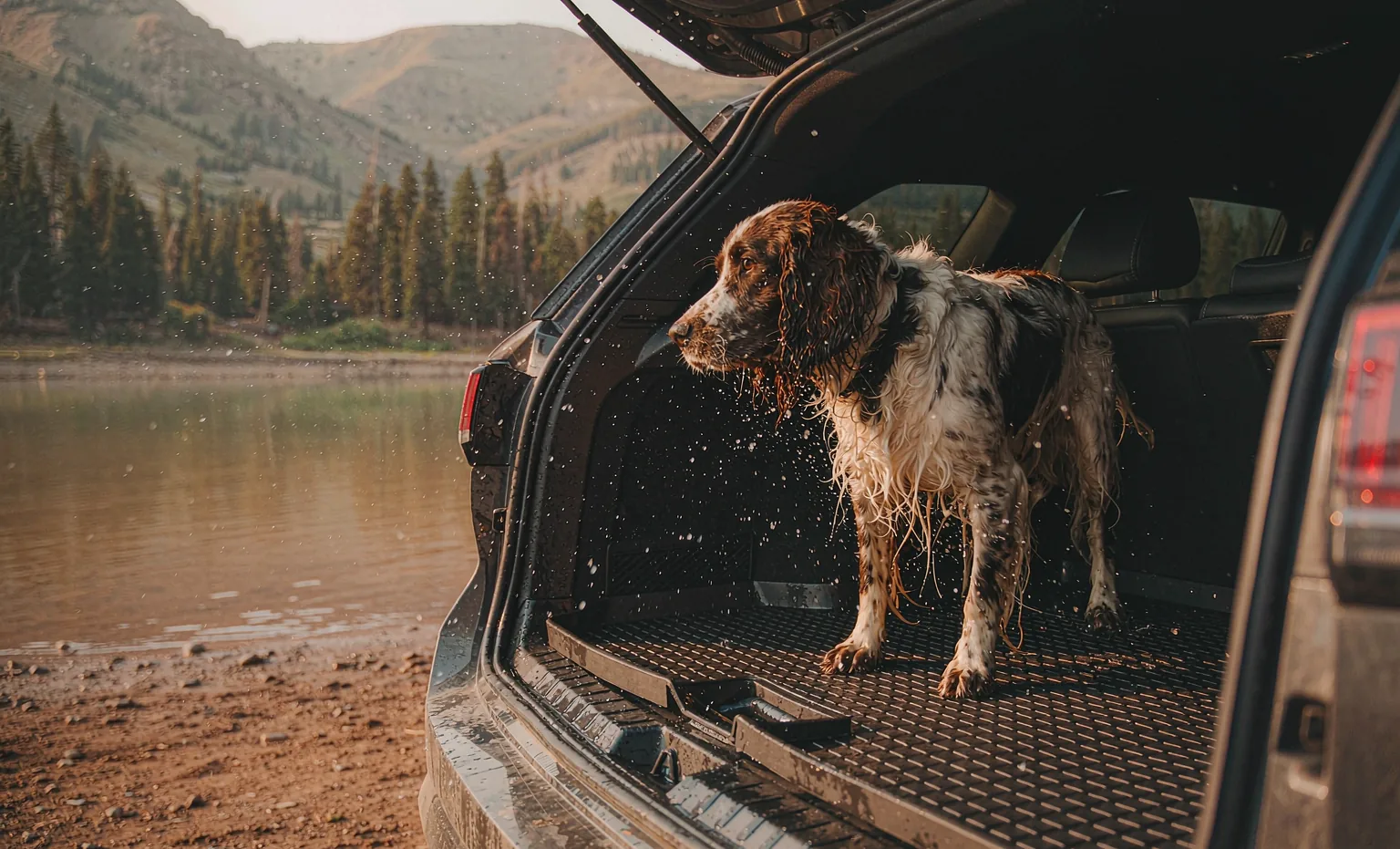
The cargo bay wins on three things, and they’re real ones. It’s the only place where a large dog can lie down fully stretched. It keeps mud, water and shed hair away from the surfaces you actually touch. And it gives you a flat load floor, which means a crate or a liner sits stable instead of sliding into the footwell.
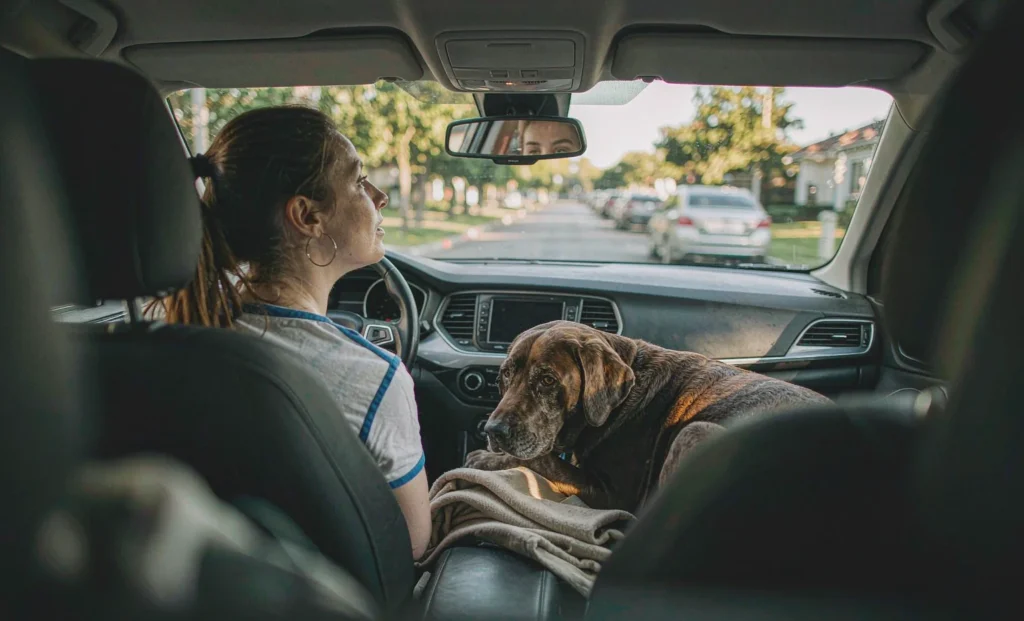
It also separates the dog from the driver. For a dog who paces, whines, or tries to climb into the front at every stoplight, a barrier is worth more than any training session. Out of sight is genuinely out of mind for a lot of dogs.
The cost is access. Every stop becomes a lift, a jump, or a wait. In a truck bed it becomes a question of temperature and restraint that has no good cheap answer. And as dogs age, a tailgate lip of 30 inches goes from nothing to a wall.
What the back seat is genuinely better at
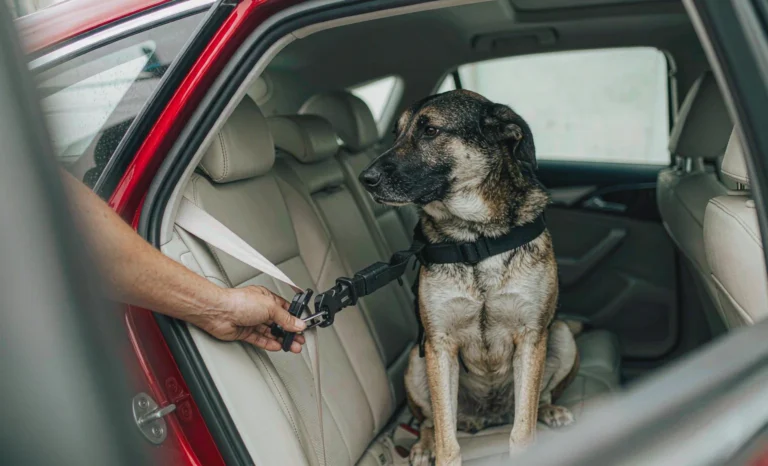
The back seat wins on everything that involves the dog as a participant rather than cargo. They can see you. You can reach them. They’re inside the climate you’re controlling, at the height you’re controlling, with the windows you’re controlling.
It’s also where anxious dogs do better. A nervous rescue who panics in the cargo area will often settle within a week on a bench they can put their chin on. For small dogs it isn’t even a contest — the cargo bay of a mid-size SUV is a very large, very echoey box for a twelve-pound dog.
The cost is your upholstery, and the fact that a big dog on a bench takes the whole bench. If you carry passengers and a large dog, the back seat is a negotiation you will lose.
How to actually decide
Run it in this order.
Size first. Under about 40 pounds, back seat unless the dog is a mess. Over about 70 pounds, cargo unless they can’t get in. In between, temperament decides it.
Then age, projected forward. This is the one people skip. Ask not whether your dog can jump in today, but whether they’ll be able to at ten, twelve, fourteen. If the answer is no, put them where the step is small now and save yourself the re-training later.
Then mess. Wet, muddy, sandy dogs belong on a surface you can hose. That’s true in either location — it’s an argument for a liner, not for a cargo bay.
Then temperament. Pacing and vocalizing push toward cargo. Separation anxiety and car sickness push toward the seat, where you can see them and they can see you.
What goes in each one
TPE cargo liner — $45.00
Trim-to-fit, raised edge, wipes or hoses clean in under a minute. If your dog rides back there wet, this is the difference between “we’ll go again Saturday” and “not in my car.”
Quilted rear bench cover — $33.60
The seat option for a dog who doesn’t need waterproofing so much as a place that is theirs. Machine washable, nonslip backing, anchor straps so it doesn’t slide out from under them on a corner.
Hammock-style seat cover — $37.80
For the back-seat dog who also tries to climb forward. The hammock panel is the point — it closes the gap between the seats instead of asking the dog to respect an invisible line.
Folding travel crate — $59.60
If you land on cargo but your dog isn’t trustworthy loose back there, the crate turns the cargo bay into a den instead of a room. Sets up in seconds, folds flat when you need the space.
The re-test I’d give anyone: put your dog in the spot you’ve chosen and count how long it takes them to lie down. Under two minutes and you got it right. Ten minutes of circling, standing and re-sitting means the location is wrong for them, whatever the theory says.
When the answer changes
Three times, reliably. After surgery or injury, when jumping goes from fine to dangerous. In the last third of a large dog’s life, when hips go before appetite does. And in extreme heat, when the cargo area of an SUV — glass on three sides, no vents back there in many vehicles — runs hotter than the cabin.
None of these are failures. They’re the dog telling you the setup has expired, and the only mistake is not listening because the old way worked for six years.
Common questions
Is the cargo area safer than the back seat?
We won’t give you a crash rating — we don’t run crash tests and we don’t repeat numbers we can’t show you. What’s true in everyday driving is that the cargo area removes the dog from the passenger space entirely, which prevents distraction and prevents a dog from becoming a projectile in a hard stop. That’s a real benefit, and it’s the honest version of the claim.
My dog is 90 pounds. Can they ride on the back seat?
Physically yes, practically rarely. A dog that size on a bench takes the whole bench and leans on the door in corners. Cargo with a liner, or cargo with a crate, is the setup that survives contact with reality.
Can I switch back and forth?
You can, and plenty of people do — cargo on trail days, bench on errand days. Just expect two weeks of mild confusion while your dog recalibrates. Keep the same blanket in both places; the smell does most of the work.
Read next: cargo liner or seat cover · why fit matters. Start from Drive Together for the everyday rides, or the Gear Lab to compare before you buy. More in daily and weekend.