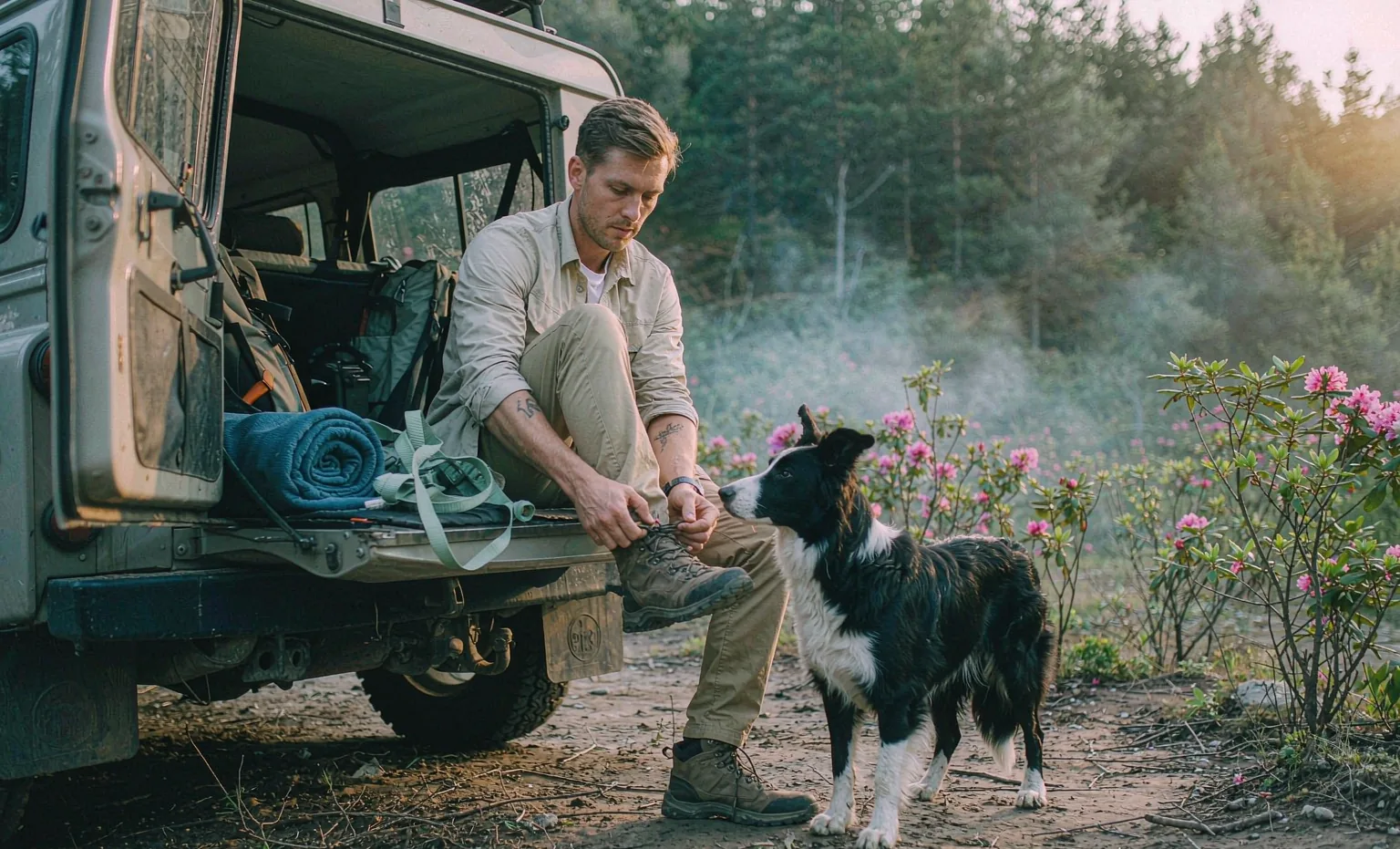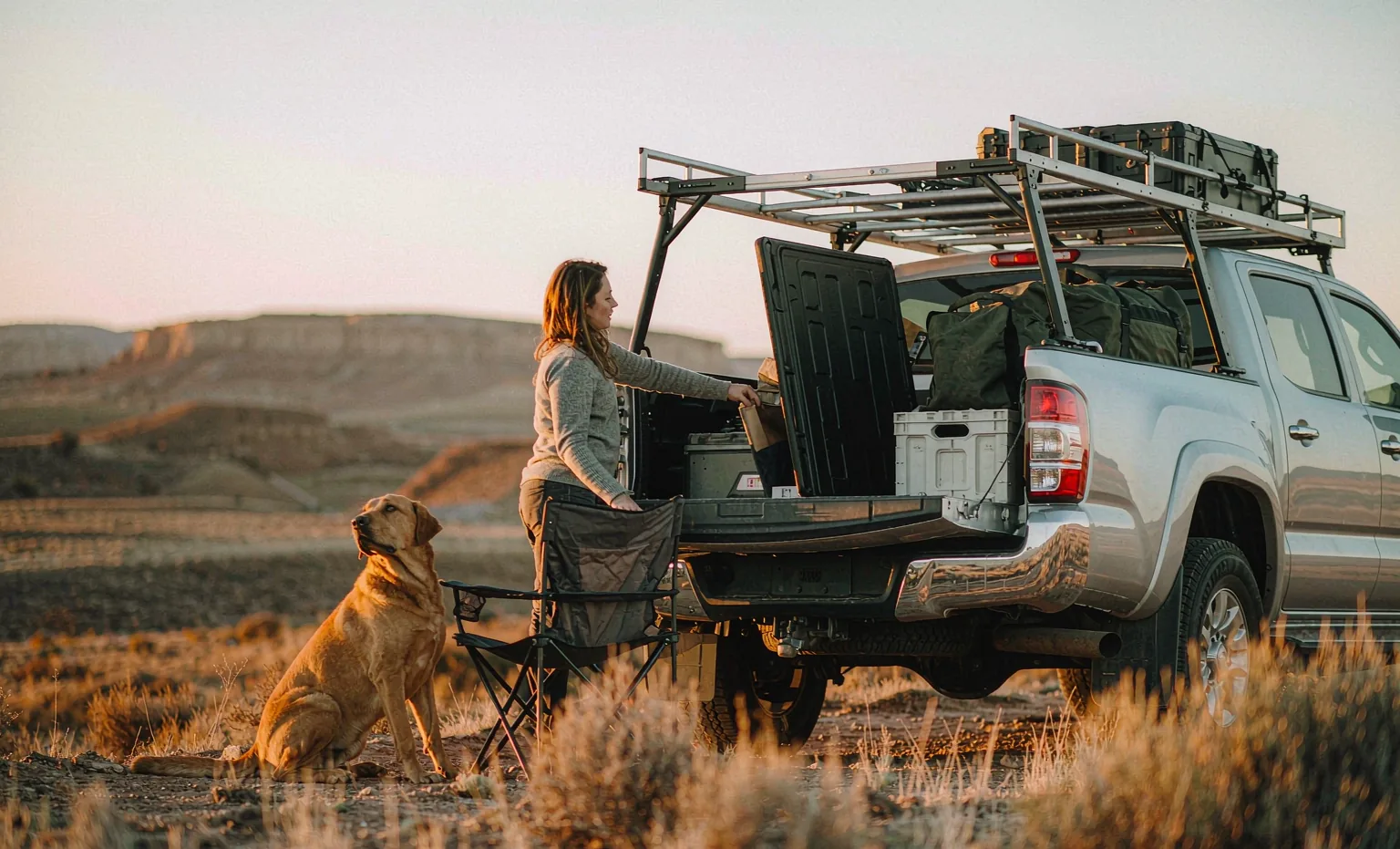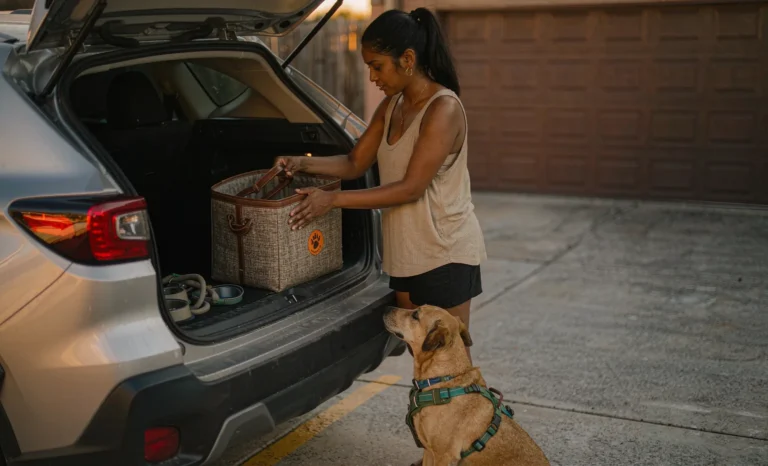
The plan was simple: leave early, beat the traffic, be on the sand by ten. We did all three. What we didn’t plan for was the state of the cargo area when we got home — or how much of the drive I spent twisted around in my seat, checking on a dog I couldn’t see.
Juniper is fifty-five pounds of golden retriever with no concept of personal space and a firm belief that every rest stop is a suggestion. Our six-hour run to the coast was her first real road trip. It went fine, mostly. But somewhere around hour four I started keeping a list, and by the time we pulled into the driveway that night — sand in the carpet, a spilled water bowl doing laps in the trunk, her leash buried under a duffel — the list had a title: things the car setup got wrong.
The dog wasn’t the problem. The setup was.
What actually went wrong
None of it was dramatic. That’s the thing about a bad travel setup — it doesn’t fail all at once, it just taxes you quietly for the whole drive.
- No surface. Her blanket slid off the cargo floor by the first on-ramp and never came back. Everything after that was dog-on-carpet, then dog-on-sand, then sand-on-everything.
- No kit. The leash was in a backpack. The bowls were in the kitchen. The towel was, theoretically, in the house. Every stop meant a small excavation.
- No water plan. We bought a bottle at a gas station and poured it into cupped hands. She was patient about it. I was not.
- No end-of-day plan. The wet-dog problem is real. We solved it with a beach towel and regret.
The rebuild, in the order it mattered
The fix wasn’t buying more stuff. It was deciding, once, what the car’s job is — and then letting the car keep its own gear so the house never has to be involved.
1. A real surface — TPE cargo liner, $45.00
This was the single upgrade that changed the trip. It wipes clean, it doesn’t slide, and mud dries on top of it instead of bonding with the carpet. After the second coastal trip I hosed it off on the lawn and it looked like nothing had happened.
2. One bag that never leaves the car — collapsible bowls, $7.60
Bowls, poop bags, a towel, a spare roll of paper towels, treats. All of it lives in a single tote behind the driver’s seat. If we’re taking the dog, the bag is already there. No packing, no forgetting.
3. A leash that clips before the door opens — padded traffic leash, $11.80
Rest stops are parking lots. The rule now is clip-then-open, every single time, no exceptions even when she’s being perfect — especially when she’s being perfect. The short, stiff handle is made for exactly this moment.
4. A harness that does the pulling so my shoulder doesn’t — padded mesh harness, $25.60
She’s not a puller on flat pavement, but trailheads and gas stations are exciting. A front-clip harness turned every stop from a negotiation into a formality.
5. Something to chew that isn’t my center console — rubber bone toy, $8.40
The last hour of a long drive is the hard hour. A durable chew toy buys a calm, quiet dog while the highway does its thing. It has paid for itself roughly forty times.
What six hours feels like now
The rhythm is the same; the friction is gone. We stop every two and a half hours whether she asks or not — water from the kit, five minutes of sniffing, back in. She figured out the routine by the second stop and now settles into the cargo corner like it’s her seat. Somewhere past the halfway mark she always falls asleep, and I always check the mirror anyway. Some habits don’t need fixing.
The other change is invisible but bigger: because the car now carries its own gear, the decision to go somewhere is a yes instead of a project. That’s the real product of a good setup. Not a cleaner trunk — more trips.
The ten-minute rule. However late you’re running, spend ten minutes before you leave on three things: surface down, kit in the car, leash clipped to the harness before the door opens. Everything else can be improvised. Those three can’t.
Questions I get about road-tripping with a dog
How often should you stop on a long drive with a dog?
Every two to three hours works for most adult dogs — five minutes of water and sniffing beats a long, exciting stop that winds them up. Puppies and seniors need more. The point of the stop is the routine, not the distance.
Where should a large dog ride?
The cargo area of an SUV or wagon, on a non-slip surface, is the most practical setup for a big dog — contained, comfortable, and out of the airbag zones. Whatever position you choose, the surface and the containment are the two things to get right.
What do you do with a wet, sandy dog at the end of the day?
Rinse what you can, towel thoroughly, and give them a dedicated corner on a wipeable surface for the ride home. Then clean the surface, not the car. This is exactly why the cargo liner exists.
Is it safe to drive with a dog in the car in summer?
Travel early or late, run the AC, never leave the dog alone in a parked car, and watch the pavement at rest stops. If the surface is too hot for your hand, it’s too hot for paws.
Planning your own run? Start with the road trip scene, or see what we pack in the season boxes.
Read next: the 20-minute load-out · sleeping in the car overnight
More from Road Stories
Part of Explore Together · Drive Together · Gear Lab · Season Boxes